Some rules are made to be broken, but this color rule is one you’ll want to follow if you’re redecorating your kitchen this year. The 60-30-10 approach is key to ensuring your palette feels balanced, considered, and far from underwhelming.
The kitchen colors you choose can make or break your scheme. There are a lot of different surfaces at play, and getting the tonal balance and color combinations right is what will elevate your design. This is why designers recommend the 60-30-10 rule to help get the color distribution in your kitchen right.
Choosing colors for your kitchen can be a tricky decision, especially when there are so many different elements to consider. But the 60-30-10 theory makes it easy to divide the elements of your kitchen to create a visually cohesive color palette.
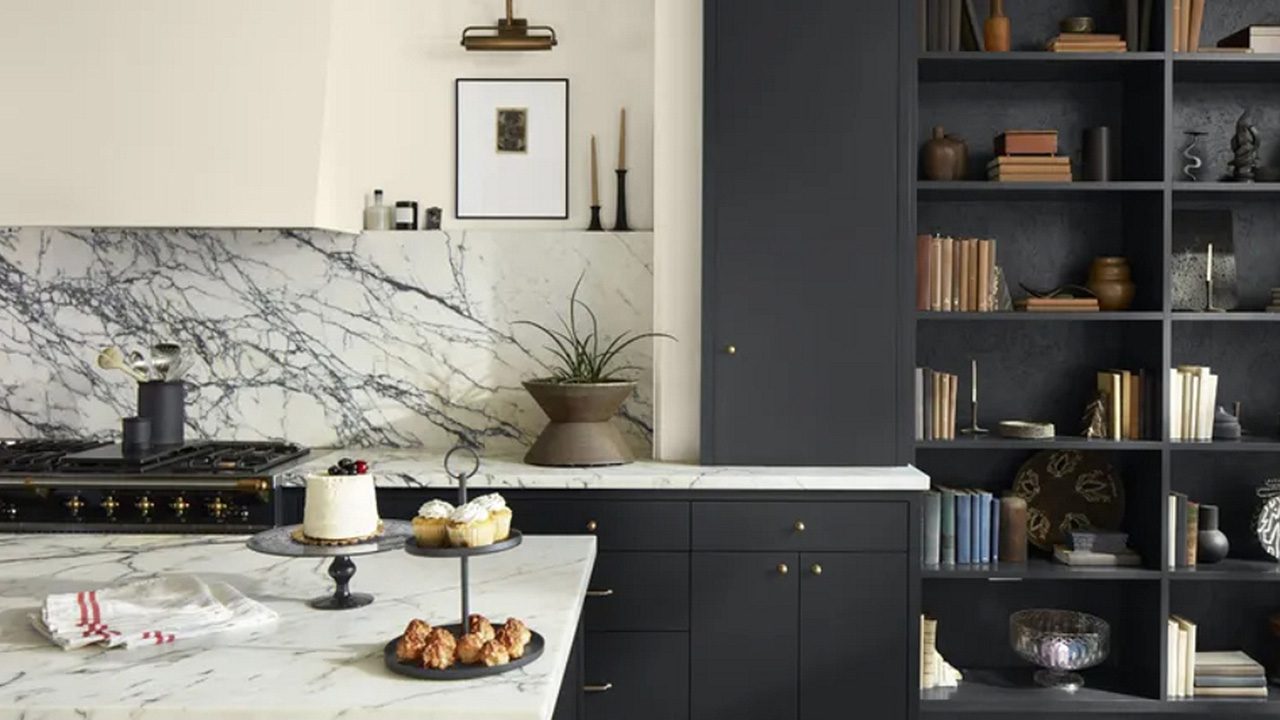
In this kitchen, the countertop and backsplash tie together the primary color, Benjamin Moore Mopboard Black CW-680, and the wall color, Benjamin Moore Sail Cloth OC-142. The ceramics and decor in bronze accent also work to tie these two colors together.
You can use the 60-30-10 color rule in most rooms of the home, but it feels perfect for a kitchen because the percentages align so well with all the elements.
The theory translates especially well to kitchen design because the proportions of cabinetry to countertops and backsplashes to decorative accents like furnishings or window treatments are basically those same proportions.
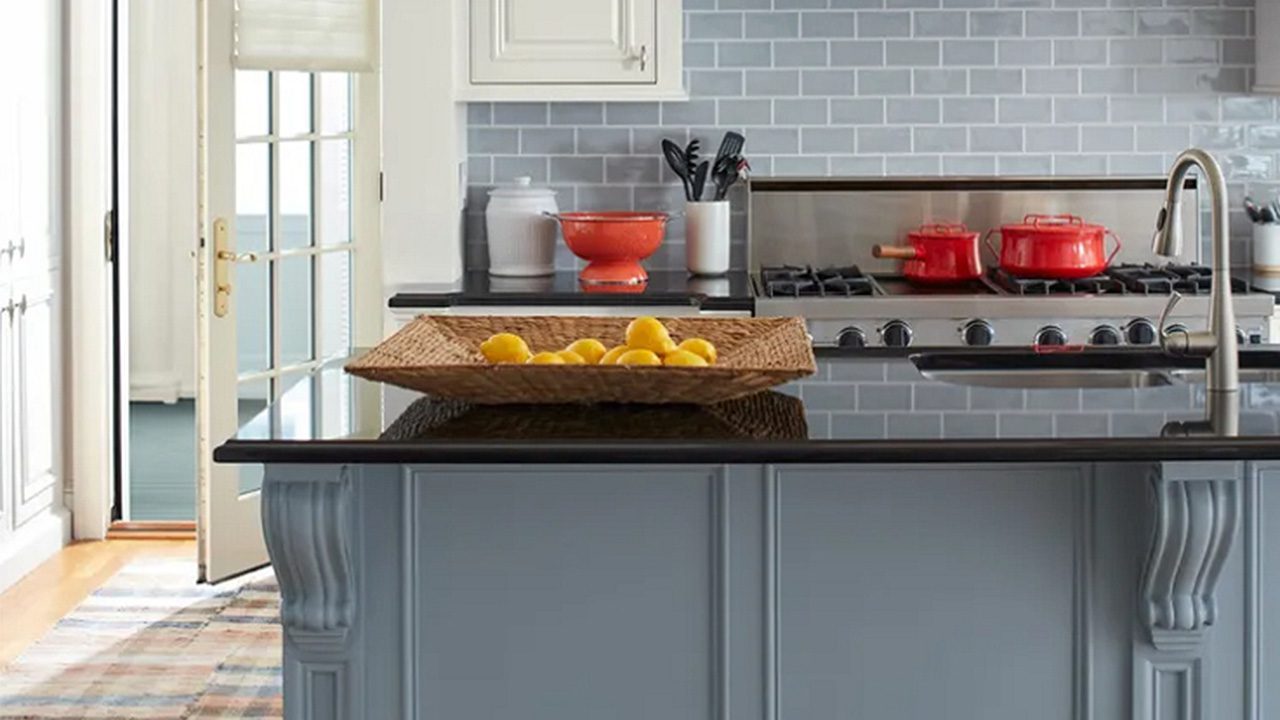
In this kitchen, the island is Benjamin Moore New Hope Gray 2130-50, and the backsplash is a similar shade, but slightly lighter. These would both be considered the secondary color in the design. Benjamin Moore Swiss Coffee OC-45 is the wall, ceiling, and cabinet color, making it the primary color in the space. Instead of a color, rattan accessories form the final 10 percent.
The beauty of this color theory is that it can be applied to kitchens of every size, style, and palette!
Any content, resident submissions, guest columns, advertisements, and advertorials are not necessarily endorsed by or represent the views of Best Version Media LLC (BVM) or any municipality, homeowners associations, businesses, or organizations that this publication serves. BVM is not responsible for the reliability, suitability, or timeliness of any content submitted, inclusive of materials generated or composed through artificial intelligence (AI). All content submitted is done so at the sole discretion of the submitting party.