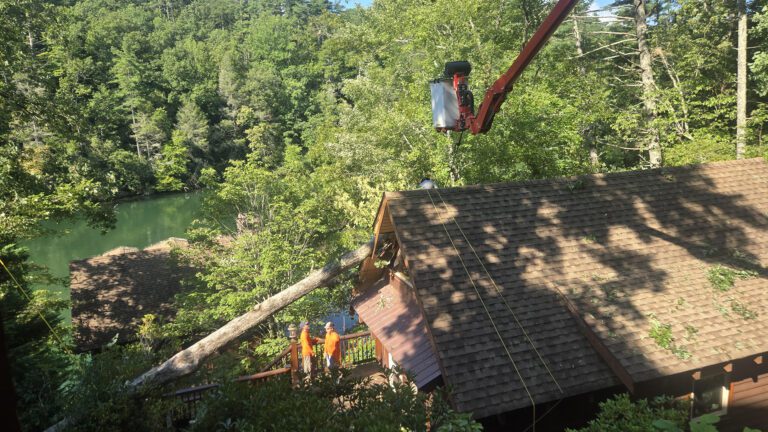
Cutting and trimming trees protects property, but have you considered why safeguarding vulnerable tree species also matters?
For many homeowners, the hemlock is more than just a tree. These majestic evergreens support an entire ecosystem by cooling streams, sheltering wildlife, stabilizing soil, creating shade, and adding natural beauty to a property. Unfortunately, they are also vulnerable, and without proper care, they can decline quickly.
Known for their feathery needles and elegant branches, hemlocks thrive in cool environments and can live for hundreds of years when conditions are right. What many people don’t realize is how irreplaceable these trees are—and how quickly they are disappearing. The biggest threat to these evergreens isn’t weather or age; it’s the invasive hemlock woolly adelgid (HWA), a tiny insect that feeds on the tree’s nutrients, slowly starving it.
Many homeowners mistakenly believe their hemlocks are “too far gone,” but these trees can often be saved if treated early. Cutting should be the last resort, not the first. With proper care and treatment, hemlocks can recover and remain healthy for decades. Removing a hemlock means losing decades of growth that no replacement tree can match.
Although saving hemlocks is usually the best option, there are situations where removal is the safest choice. Severe structural damage, long-term HWA infestation, or risks to people and property may make removal necessary. It is essential to know the difference between a tree that can recover and one that poses a hazard.
Every hemlock saved is a victory—for the landscape, for wildlife, and for the future of our forests. By acting early and choosing treatment over removal whenever possible, homeowners can help ensure these remarkable evergreens remain a living legacy. The decision to act today can protect your hemlocks, preserve your property, and help ensure these irreplaceable trees remain part of our forests for generations to come.
Any content, resident submissions, guest columns, advertisements, and advertorials are not necessarily endorsed by or represent the views of Best Version Media LLC (BVM) or any municipality, homeowners associations, businesses, or organizations that this publication serves. BVM is not responsible for the reliability, suitability, or timeliness of any content submitted, inclusive of materials generated or composed through artificial intelligence (AI). All content submitted is done so at the sole discretion of the submitting party.