When most people look in the mirror, they see their smile as a reflection of confidence, personality, and appearance.
As dentists, we see something more.
Every day, your mouth provides valuable clues about what’s happening throughout the rest of your body. In fact, many medical conditions can leave early warning signs inside the mouth long before symptoms appear elsewhere.
Your smile may be telling a much bigger story than you realize.
Are Your Teeth Wearing Down?
One of the most common things dentists notice is worn, flattened, or chipped teeth.
Many people assume this is simply a normal part of getting older, but excessive wear is often a sign of teeth grinding or clenching—a condition known as bruxism. Many people grind their teeth while sleeping and have no idea they’re doing it.
Stress and anxiety can contribute to clenching habits, but worn teeth may also be a clue to something more serious, such as obstructive sleep apnea. In some cases, your dentist may be the first healthcare provider to recognize the warning signs.
Bleeding Gums Are Not Normal
Have you ever noticed blood in the sink when brushing or flossing?
Many people think occasional bleeding is normal, but healthy gums generally do not bleed.
Bleeding gums are often one of the earliest signs of gum disease, an inflammatory condition that affects the tissues supporting your teeth. Left untreated, gum disease can lead to bone loss, tooth loss, and has been linked to several systemic health conditions.
The good news? When caught early, gum disease is often highly treatable.
The Importance of Saliva
Saliva doesn’t get much attention, but it plays a critical role in keeping your mouth healthy.
Think of saliva as your mouth’s natural defense system. It helps wash away bacteria, neutralize acids, protect tooth enamel, and aid digestion.
When saliva production decreases, patients may experience dry mouth, increased cavities, bad breath, difficulty swallowing, or oral discomfort.
Many common medications—including blood pressure medications, antidepressants, and allergy medications—can contribute to dry mouth. Certain medical conditions and cancer treatments can as well.
What Your Tongue Can Reveal
Your tongue can provide surprising insights into your overall health.
A smooth, shiny, or unusually red tongue may occasionally suggest nutritional deficiencies, particularly deficiencies involving iron or certain B vitamins.
Meanwhile, white patches, persistent sores, or areas that don’t heal normally should never be ignored. While most changes are harmless, some can signal more serious conditions and deserve prompt evaluation.
Your Teeth May Be Warning You About Acid Reflux
Many people are surprised to learn that dentists frequently identify signs of acid reflux.
When stomach acid repeatedly enters the mouth, it can slowly dissolve and erode tooth enamel. Over time, teeth may become thinner, more sensitive, and more prone to wear.
What’s particularly interesting is that some patients experience little or no heartburn. The first indication of a problem may actually be what the dentist sees during a routine examination.
One Screening That Could Save a Life
Every routine dental examination includes something many patients don’t realize they’re receiving: an oral cancer screening.
During this examination, dentists evaluate the tongue, cheeks, lips, throat, floor of the mouth, and surrounding tissues for abnormalities.
Like many forms of cancer, early detection dramatically improves treatment outcomes. These screenings take only a few moments, but they are one of the most important preventive services provided during a dental visit.
Even Your Bite Tells a Story
Changes in the way your teeth fit together can also provide important health clues.
Adult teeth generally do not move significantly without a reason. Changes in tooth position, shifting bites, gaps that suddenly appear, or unusual wear patterns can indicate underlying concerns that deserve attention.
Sometimes these changes occur gradually, making them difficult for patients to notice until a dentist points them out.
More Than Just a Dental Checkup
Many people think a dental exam is simply a search for cavities.
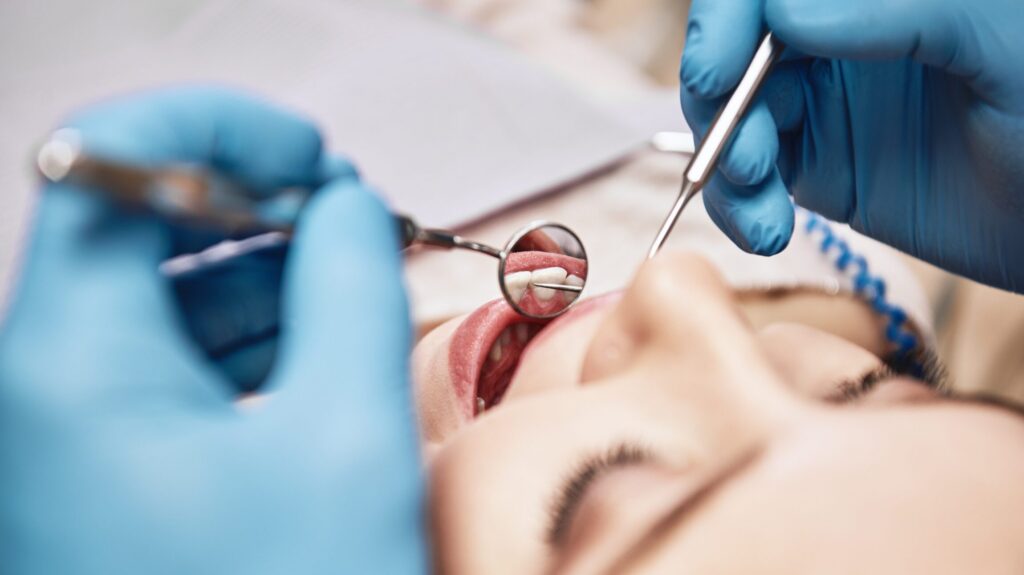
In reality, dentists evaluate much more than your teeth. We assess the health of your gums, tongue, oral tissues, jaw joints, bite, and overall oral environment. We also look for signs that may indicate larger health concerns affecting the rest of the body.
Your mouth is one of the few places where healthcare providers can directly observe blood vessels, bone, soft tissue, and signs of inflammation all in one location.
That’s why routine dental visits are about far more than maintaining a beautiful smile.
The Bottom Line
Your smile is one of the most visible parts of your body, but it’s also one of the most informative.
A worn tooth, bleeding gums, persistent dry mouth, or a small change in oral tissue may seem insignificant, yet these findings can provide valuable clues about your overall health.
The next time you visit your dentist, remember that the examination involves much more than your teeth. Your smile may be revealing important information about your health—and paying attention to those signals can make a meaningful difference.
Because a healthy smile isn’t just about looking good.
It’s often one of the first signs of a healthy body.
Any content, resident submissions, guest columns, advertisements, and advertorials are not necessarily endorsed by or represent the views of Best Version Media LLC (BVM) or any municipality, homeowners associations, businesses, or organizations that this publication serves. BVM is not responsible for the reliability, suitability, or timeliness of any content submitted, inclusive of materials generated or composed through artificial intelligence (AI). All content submitted is done so at the sole discretion of the submitting party.