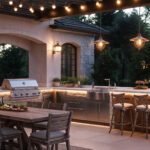
Outdoor kitchens have moved well beyond a simple grill and a folding table. Today’s backyard cooking spaces rival indoor kitchens in function and style, complete with built-in grills, refrigerators, sinks, and even pizza ovens. Before you break ground, though, it’s worth understanding both the benefits and the potential pitfalls of adding one to your home.
The Benefits
The most obvious draw is lifestyle. An outdoor kitchen extends your living space, giving you a natural gathering spot for barbecues, holidays, and everyday meals. It keeps heat, smoke, and cooking odors out of the house during summer months, and it often becomes the centerpiece of backyard entertaining.
There’s also a financial upside. A well-designed outdoor kitchen can boost home resale value, particularly in warmer climates where outdoor living is a year-round draw. Buyers increasingly view these spaces as premium amenities rather than luxuries.
Finally, outdoor kitchens encourage healthier, more social cooking habits. Grilling and open-flame cooking tend to use less oil, and the communal setup naturally draws family and friends outside.
The Warnings
That said, outdoor kitchens come with real considerations. Cost is the biggest one built-in appliances, weatherproof cabinetry, plumbing, and gas lines add up quickly, often reaching tens of thousands of dollars for a full setup. Permits are frequently required for gas, electrical, and plumbing work, so check local codes before designing anything.
Weather exposure is another concern. Even “outdoor-rated” appliances degrade faster than indoor ones when exposed to rain, humidity, and temperature swings. Materials matter enormously: stainless steel, concrete, natural stone, and weather-resistant cabinetry will hold up far better than budget alternatives.
Patio or Deck?
Patios typically concrete, pavers, or stone are the more common choice for outdoor kitchens. They’re non-combustible, sit at ground level, and handle heavy appliances and gas lines more easily. Decks can work, but wood or composite decking requires careful fireproofing, reinforced framing for heavy equipment, and often additional permitting due to fire risk and structural load.
Covered or Uncovered?
A cover whether a pergola, hard roof, or louvered system protects appliances from rain and sun damage, extends the usable season, and shields cooks from the elements. The tradeoff is cost and the need for proper ventilation, especially with gas grills or wood-fired ovens, to avoid smoke buildup. Uncovered kitchens are cheaper and simpler but require more diligent appliance covers and maintenance.
Amenities to Consider
Beyond the grill, popular additions include:
- Built-in refrigerators and ice makers
- Sinks with hot and cold water
- Countertop space in granite, concrete, or stainless steel
- Bar seating or a dining counter
- Pizza ovens or smokers
- Task and ambient lighting
- Weatherproof storage for tools and dishware
The Bottom Line
An outdoor kitchen can transform how you use your backyard, but success depends on realistic budgeting, durable materials, and smart planning around structure and climate. Start with your must-have amenities, choose a surface and cover strategy suited to your local weather, and consult a contractor familiar with local permitting before you buy a single appliance.
Any content, resident submissions, guest columns, advertisements, and advertorials are not necessarily endorsed by or represent the views of Best Version Media LLC (BVM) or any municipality, homeowners associations, businesses, or organizations that this publication serves. BVM is not responsible for the reliability, suitability, or timeliness of any content submitted, inclusive of materials generated or composed through artificial intelligence (AI). All content submitted is done so at the sole discretion of the submitting party.