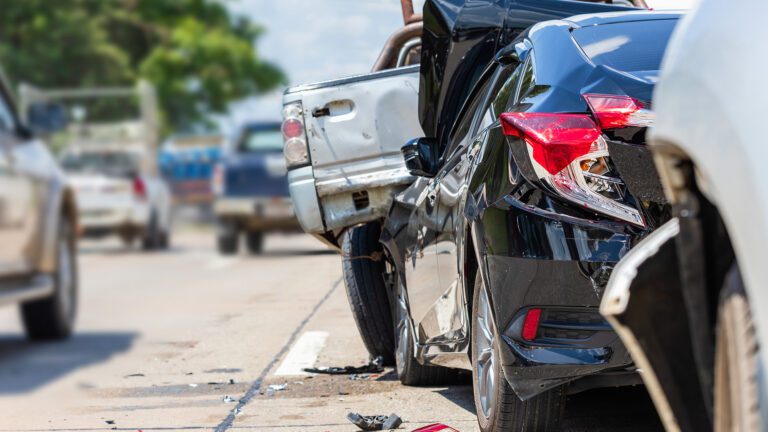
You lent your car to a friend. They caused an accident. Both of you have insurance. Whose policy pays?
The short answer: It depends on the policies and the state. But in most cases, the rules follow a clear pattern.
Whose insurance pays first?
In most states, the auto insurance policy that covers the vehicle is primary. That means your insurance company—as the car’s owner—typically pays first for damages from an accident, even if someone else was driving.
Laws and policy language vary by state, so it’s smart to confirm the rules with your agent before handing over the keys.
With Shelter Insurance, coverage in this situation is limited to the state’s minimum liability requirements for the at-fault driver. Any remaining policy limits stay available to protect you if you’re named in a lawsuit. Amounts above the state minimum usually become the responsibility of the friend who caused the crash. Keep in mind: the claim still appears on your policy and can affect your future rates.
What if the roles are reversed?
Suppose you’re driving a friend’s car (with permission for that specific use, not ongoing permission) and cause an accident. Shelter would typically provide coverage for amounts that exceed what your friend’s policy pays. Depending on the exact wording of both policies, the companies may treat one as primary and the other as excess, or they may prorate the loss between them.
What if your friend has no insurance?
If the friend who wrecked your car is uninsured, they are generally responsible for any costs that go beyond what your Shelter policy covers. If they can’t pay, recovering those amounts can become difficult.
Long-term borrowing is different
If a friend needs your car for more than a short period—weeks or months—it’s better to add them to your policy as a listed driver. Failing to do so risks the insurance company denying a claim if they discover the arrangement.
The smart move before you lend the car
Lending a car to a friend in a tight spot is understandable. Just protect yourself first:
- Call your agent and ask how a claim would be handled if someone else is driving.
- Confirm that your friend has their own insurance and understand how their company would respond.
- Remember that every claim is unique and depends on the specific facts.
A quick conversation with your agent can prevent costly surprises later.
Any content, resident submissions, guest columns, advertisements, and advertorials are not necessarily endorsed by or represent the views of Best Version Media LLC (BVM) or any municipality, homeowners associations, businesses, or organizations that this publication serves. BVM is not responsible for the reliability, suitability, or timeliness of any content submitted, inclusive of materials generated or composed through artificial intelligence (AI). All content submitted is done so at the sole discretion of the submitting party.