
Heel pain is one of the most common reasons people seek foot care, and many patients arrive already using the same phrase: “I think I have plantar fasciitis.”
Sometimes they are right.
But not always.
Plantar fasciitis is a common cause of heel pain, especially when the pain is sharp with the first steps in the morning or after sitting for a while. The plantar fascia is a strong band of tissue that supports the arch and attaches near the heel. When it becomes irritated or overloaded, it can make walking painful and frustrating.
The problem is that not every painful heel comes from the plantar fascia.
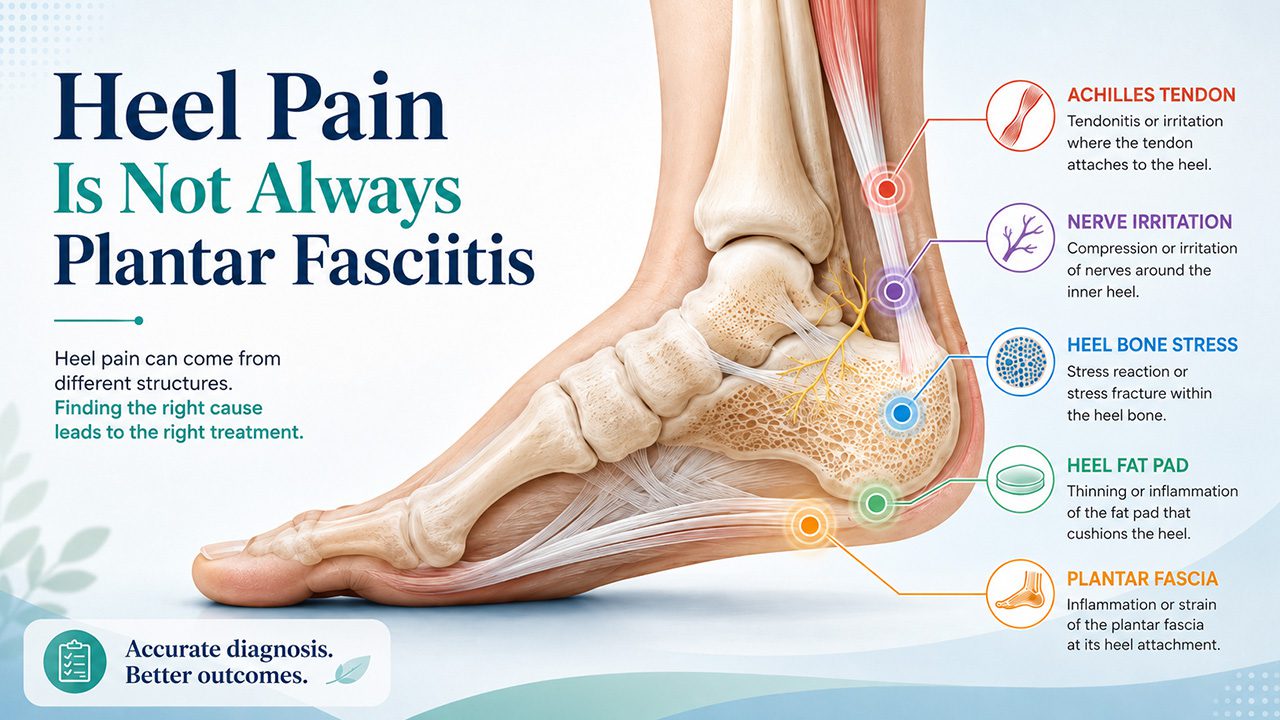
Heel pain can also come from nerve irritation, Achilles tendon strain, a stress injury, arthritis, inflammation around the heel bone, poor shock absorption, or thinning of the natural fat pad under the heel. Sometimes the pain is caused by the way the foot moves. Sometimes it is related to tight calf muscles, unsupportive shoes, standing on hard floors, or a sudden increase in activity.
This is why guessing can delay healing.
If every heel pain is treated the same way, the real cause may be missed. A patient with nerve pain may not improve with the same plan used for plantar fasciitis. A patient with a stress injury may need protection and rest, not more stretching. A patient with fat pad thinning may need better cushioning and pressure relief. A patient with tendon involvement may need a different approach than someone with ligament strain.
The location of pain matters. The timing matters. The type of pain matters. Morning pain, burning pain, deep aching pain, pain after activity, pain during activity, and pain that worsens with pressure can all point in different directions.
Heel pain is not just a diagnosis. It is a clue.
A proper evaluation looks at more than the painful spot. It looks at foot structure, walking pattern, shoe support, flexibility, strength, activity level, and how long the pain has been present. In some cases, imaging may be needed to rule out other causes.
The goal is not only to calm the pain. The goal is to understand why it started and why it has not gone away.
If your heel pain keeps returning, does not improve, or feels different than the usual “first-step” pain, it may not be plantar fasciitis at all.
Your heel is giving you information.
The right plan starts by listening to what it is trying to say.
Any content, resident submissions, guest columns, advertisements, and advertorials are not necessarily endorsed by or represent the views of Best Version Media LLC (BVM) or any municipality, homeowners associations, businesses, or organizations that this publication serves. BVM is not responsible for the reliability, suitability, or timeliness of any content submitted, inclusive of materials generated or composed through artificial intelligence (AI). All content submitted is done so at the sole discretion of the submitting party.