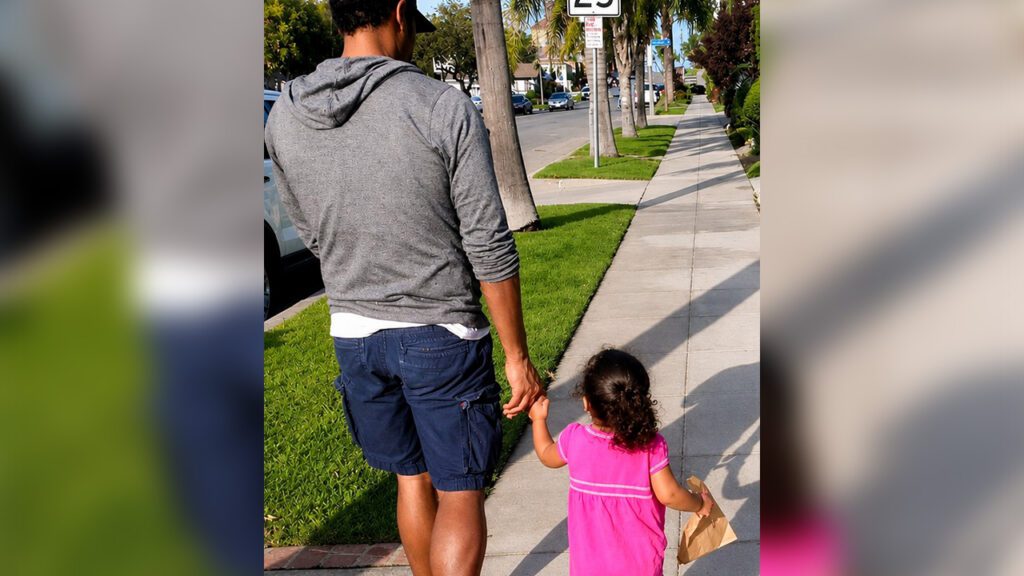
The beginning of my daughter’s life was the end of mine as I knew it. It was now hers. On the day of her birth, I felt a beautiful chaos of joy and quiet panic. Questions about her future and doubts about my ability to parent filled my mind. Who will she grow up to be? What do I need to teach her? How can I teach her when I am still working on myself?
As an early childhood educator, I understood her development, but love threw a prism over my professional lens. Her small smile—it was in the image of her mother’s; my heart manifested. Her eyes were a mirror reflecting the best of my life, my childhood, and my soul.
Nearly five years later, when my son arrived, I felt the same breathtaking mix of gratitude and heavy responsibility. I began to wonder what type of man he would become. What must I do to help him? What does it mean to be a man anyway?
Like most parents, I feel a sharp tension as I prepare my children for adulthood without dispelling the fragile wonder of childhood. Our adult minds transform typical struggles into future crises. We fear that not sharing now means they will grow up selfish and friendless. We worry that if they are not reading, writing, or solving mathematical equations, they will fall behind academically and professionally. Tantrums, screaming, and hitting make us fear they will become unruly adults who struggle in society.
These fears are natural for parents to feel. On top of the weight of accountability that modern society places on us to parent well, our worries are rooted in deep love and a desire to protect our children’s future. Yet, when that pressure and fear take over, we can slip into patterns that make things harder for everyone—pressuring children, reacting with frustration, or stepping in too often. In trying so hard to protect and prepare them, we sometimes deny them the space to learn, grow, and become resilient on their own.
Drawing on the ideas of Loris Malaguzzi, pioneer of the Reggio Emilia approach, I think of a child’s learning not as a direct result of our instruction, but as a wonderful collision between their curiosity and the resources we place before them. Giving children a leading role in their learning does not mean abandoning them. It calls on us to be intentional and present—shaping their environment, noticing what captures their minds, and observing what they are trying to figure out. When we pay close attention, we can offer the right question or tool to nudge their thinking forward.
My daughter’s childhood is quietly giving way to the woman she is becoming. In her eyes, I still see echoes of my past and the brightest light in my life. Her smile carries the image of the little girl I once held, though I cannot remember the last time I held her that way. My son, too, is nearing adolescence, and I still wonder what kind of man he will become. I hope he grows into himself, not merely into a reflection of what the world—or I—expect.
When I became a father, I thought preparing my children for adulthood meant knowing what to teach and shaping who they would become. I had it all wrong. My most crucial job is not to decide who they will be, but to notice who they are becoming, and remain present as their life unfolds. Childhood is but a fleeting moment. I do not want to prepare them so intently that I miss them.
Any content, resident submissions, guest columns, advertisements, and advertorials are not necessarily endorsed by or represent the views of Best Version Media LLC (BVM) or any municipality, homeowners associations, businesses, or organizations that this publication serves. BVM is not responsible for the reliability, suitability, or timeliness of any content submitted, inclusive of materials generated or composed through artificial intelligence (AI). All content submitted is done so at the sole discretion of the submitting party.