Hearing that you need a tooth extracted can be overwhelming, and it’s common to wonder why your dentist is also recommending a bone graft. While it may seem like an extra step, a bone graft plays an important role in protecting your long-term oral health and preserving your smile.
Your jawbone is designed to support your teeth. When a tooth is removed, the bone that once held that tooth no longer receives the stimulation it needs from everyday chewing and biting. As a result, the bone naturally begins to shrink, a process known as bone resorption. In fact, significant bone loss can occur during the first year after an extraction, with the greatest changes happening in the first few months.
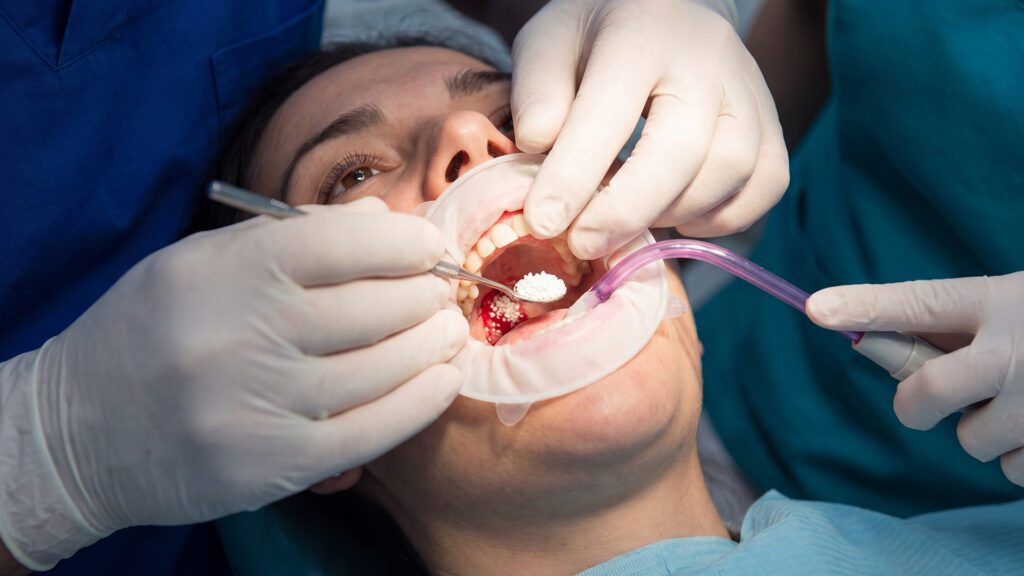
A bone graft helps preserve the shape and strength of your jaw by filling the empty socket with a biocompatible grafting material. Over time, your body uses this material as a framework to build new, healthy bone. This process helps maintain the natural contours of your jaw and creates a strong foundation for future dental treatment.
One of the biggest benefits of bone grafting is preparing the area for a dental implant. Dental implants require adequate bone for stability and long-term success. Without enough healthy bone, additional procedures may be necessary later which can increase both treatment time and cost. By placing a bone graft immediately after the extraction, many patients can avoid more extensive bone grafting procedures in the future and improve their chances of successful implant placement.
Even if you’re not sure whether you’ll choose a dental implant, preserving your bone now helps keep your options open. Once bone is lost, rebuilding it is often more complicated than preventing the loss in the first place. Bone grafting gives you greater flexibility if you decide to replace the missing tooth months or even years later.
Bone grafting also helps maintain your facial appearance. Your jawbone provides support for your lips and cheeks. As the bone shrinks, it can contribute to a sunken appearance around the mouth, making you look older over time. Preserving the bone helps maintain your natural facial structure and supports a healthier, more youthful appearance.
For patients planning to wear a bridge or denture, maintaining the jawbone can also improve the fit and stability of these restorations. A healthy ridge provides better support and may reduce future adjustments caused by changes in the shape of the jaw.
The procedure itself is typically straightforward and is performed at the same appointment as the tooth extraction. Most patients experience minimal additional discomfort beyond what is expected from the extraction alone. Your dentist will provide detailed instructions to promote proper healing, and the graft will gradually integrate with your natural bone over the following months.
While not every extraction requires a bone graft, it is often one of the best investments you can make in your future oral health. Preserving your jawbone today can simplify future treatment, maintain your smile, and help ensure the best possible long-term outcome. If your dentist recommends a bone graft after an extraction, don’t hesitate to ask questions. Understanding the benefits can help you make an informed decision and protect your smile for years to come.
Dr. Lauren Hargrove is the dental surgeon at Hiawassee Family Dental. He is also the Lake Chatuge Living Expert Contributor for Family Dentistry. He may be contacted by phone at (706) 896-1204.
Any content, resident submissions, guest columns, advertisements, and advertorials are not necessarily endorsed by or represent the views of Best Version Media LLC (BVM) or any municipality, homeowners associations, businesses, or organizations that this publication serves. BVM is not responsible for the reliability, suitability, or timeliness of any content submitted, inclusive of materials generated or composed through artificial intelligence (AI). All content submitted is done so at the sole discretion of the submitting party.