Let’s be honest.
You’ll spend four hours working in the yard in the Florida heat. You’ll swing a golf club a hundred times in one afternoon. You’ll dive for a pickleball, climb a ladder to clean your gutters, or wrestle a bag of mulch into the flower bed.
But mention acupuncture and suddenly I hear…
“No way, Doc. I don’t like needles.”
Really?
The shoulder that’s been hurting for six months is causing you far more pain than an acupuncture needle ever will. The knee that’s keeping you off the pickleball court hurts more than the treatment. And that stiff back you earned after a weekend of yard work is costing you far more than twenty relaxing minutes on an acupuncture table.
So here’s the real question.
Are you more afraid of a tiny needle—or of giving up the activities you love?
Acupuncture has been helping people feel better for more than 2,000 years. While it began as part of Traditional Chinese Medicine, modern science continues to uncover why so many patients experience real pain relief. Ancient medicine and modern medicine may use different language, but both recognize something important—the body has an amazing ability to heal when the right conditions are restored.
Traditional Chinese Medicine teaches that a life energy called Qi (pronounced “chee”) flows throughout the body along pathways known as meridians. I like to compare these meridians to Florida’s highway system.
Think about driving on I-4 or the Florida Turnpike. When traffic is moving, everyone gets where they need to go. But one accident can back traffic up for miles. Cars behind the wreck come to a complete stop while the road ahead sits nearly empty because nothing is getting through.
The meridians work much the same way. They are the body’s energy highways, carrying Qi to muscles, joints, nerves, and organs. When you strain your shoulder golfing, twist your knee playing pickleball, or overdo it working in the yard, that normal flow can become disrupted. Traditional Chinese Medicine calls this stagnation of Qi. One of its oldest sayings is simple: “Where there is stagnation, there is pain. Where Qi flows freely, there is no pain.”
From a modern medical standpoint, those same injuries may leave behind inflammation, tight muscles, restricted joints, scar tissue, and a nervous system that continues sending pain signals long after the injury should have healed. It’s like leaving the accident on the interstate. Until the blockage is cleared, traffic never returns to normal.
Acupuncture is designed to help clear that traffic jam.
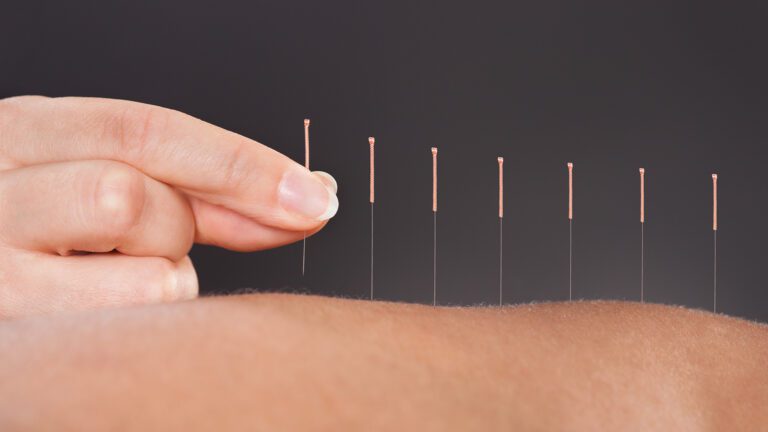
The needles are about the thickness of a dog’s whisker. They don’t inject medication. Instead, they stimulate specific points that communicate with your nervous system. Research has shown this stimulation can improve circulation, relax tight muscles, reduce inflammation, and encourage your brain to release its own natural pain-relieving chemicals, including endorphins. In many ways, acupuncture reminds the body how to do what it was designed to do—heal.
One of the biggest surprises for first-time patients is how comfortable the experience is. Most people barely feel the needles, and many become so relaxed they actually fall asleep during treatment.
If pain is keeping you from golfing, playing pickleball, working in the yard, or simply enjoying the active lifestyle you’ve earned, maybe it’s time to stop worrying about the needle and start focusing on getting your life back.
At Disc Centers–Eustis, located inside Wagner Chiropractic, we help active adults find natural, non-surgical solutions for pain every day. Call today to schedule your consultation—and discover that the smallest needles often make the biggest difference.
Any content, resident submissions, guest columns, advertisements, and advertorials are not necessarily endorsed by or represent the views of Best Version Media LLC (BVM) or any municipality, homeowners associations, businesses, or organizations that this publication serves. BVM is not responsible for the reliability, suitability, or timeliness of any content submitted, inclusive of materials generated or composed through artificial intelligence (AI). All content submitted is done so at the sole discretion of the submitting party.