
What if finding another option for pain relief didn’t require another prescription, another pill, or another trip to the pharmacy?
If you’ve ever dealt with stubborn back pain, aching joints, headaches, muscle tension, or an injury that just doesn’t seem to want to go away, you know how frustrating pain can be. You may have tried stretching, exercise, medications, massage, physical therapy, or simply tried to “push through it.” Sometimes those approaches help. Sometimes they don’t provide the relief you’re looking for.
That’s why more people are becoming interested in acupuncture as another tool in their pain-management toolbox.
One particularly interesting approach is called Battlefield Acupuncture. Despite its name, this technique isn’t just for soldiers. Developed by a U.S. Air Force physician for use in military environments, Battlefield Acupuncture was designed to provide a quick, practical approach to managing pain using a small number of acupuncture points located on the ear.
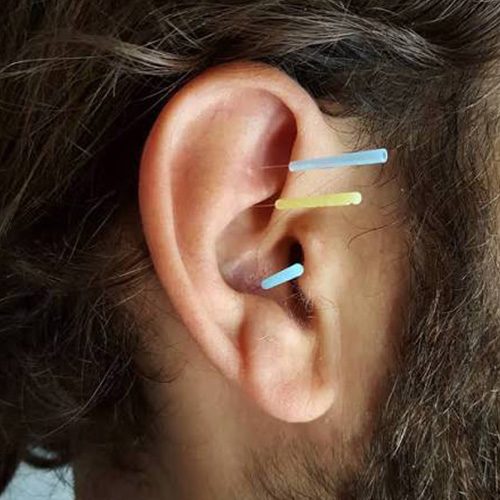
And here’s the part that surprises many people: your ear may be more connected to your nervous system and pain experience than you realize.
Battlefield Acupuncture takes advantage of specific points on the ear that are used in auricular acupuncture. Rather than placing needles throughout the body, the practitioner focuses on the ear with the goal of influencing the body’s nervous system and its processing of pain. For someone who has been searching for another way to manage discomfort or who simply wants to explore options beyond medication this can be an intriguing approach. But what exactly is Battlefield Acupuncture? Why the ear? And what does modern research tell us about acupuncture and pain? Let’s take a closer look.
From the Battlefield to the Community
Battlefield Acupuncture was developed in the early 2000s by Dr. Richard Niemtzow, a physician and Air Force colonel who was looking for a quick, practical method of acupuncture that could potentially be used in military environments. The technique became particularly interesting because it could be performed relatively quickly and required minimal equipment. In situations where traditional pain-management resources might not be immediately available, having another non-pharmaceutical tool could be valuable. Over time, Battlefield Acupuncture expanded beyond military applications and began receiving attention from practitioners interested in complementary approaches to pain management.
Why the Ear?
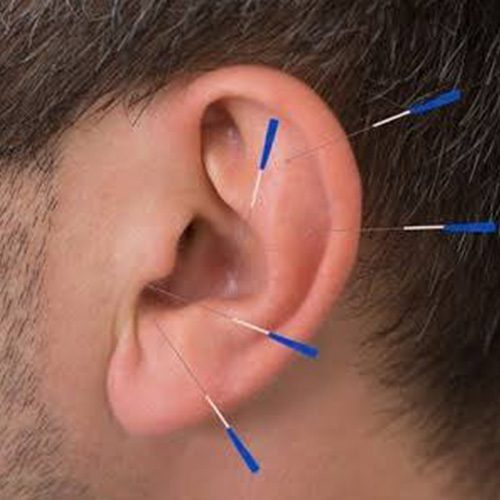
One of the unique aspects of Battlefield Acupuncture is its focus on the ear. In auricular acupuncture, the ear is viewed as a microsystem, a representation of the body in a relatively small area. Specific points on the ear are associated with different regions and functions of the body. Battlefield Acupuncture typically uses a sequence of points along the ear, including points associated with areas such as the autonomic nervous system, sensory processing, and pain modulation. The goal isn’t necessarily to “fix” an injury at the site of pain. Instead, the approach focuses on influencing the nervous system’s processing of pain.
Understanding Pain
Pain is more complicated than simply having something physically wrong with a particular body part. The nervous system constantly receives information from muscles, joints, organs, and other tissues. The brain then interprets those signals and determines how the body responds. This is one reason two people with similar injuries can experience very different levels of pain. Acupuncture is being studied for its potential effects on several of the body’s pain-modulating systems, including neurological and biochemical pathways. For some individuals, acupuncture may be used as part of a broader approach to managing musculoskeletal discomfort, headaches, stress-related tension, and other conditions.
A Few Needles and a Different Approach
One of the reasons Battlefield Acupuncture has attracted attention is that treatment can be relatively simple. Instead of placing needles throughout the body, the practitioner concentrates on specific points of the ear. Depending on the approach and the patient’s response, very small needles or semi-permanent ear needles may be used. Some people report feeling an effect quickly, while others may require multiple treatments or experience little benefit. As with any therapeutic approach, individual responses can vary.
Who Might Consider It?
People dealing with acute or persistent pain may be interested in learning whether acupuncture could be appropriate for them. It may be particularly appealing to individuals looking for non-drug approaches to pain management.
The Bigger Picture
The growing interest in Battlefield Acupuncture reflects a larger shift in how people think about pain management. Rather than relying on a single solution, many patients are exploring approaches that address pain from multiple directions: movement, rehabilitation, sleep, stress management, nutrition, manual therapies, and complementary treatments such as acupuncture. Sometimes, innovation comes from looking at an old idea from a completely different angle and Battlefield Acupuncture is an interesting example of exactly that.
Any content, resident submissions, guest columns, advertisements, and advertorials are not necessarily endorsed by or represent the views of Best Version Media LLC (BVM) or any municipality, homeowners associations, businesses, or organizations that this publication serves. BVM is not responsible for the reliability, suitability, or timeliness of any content submitted, inclusive of materials generated or composed through artificial intelligence (AI). All content submitted is done so at the sole discretion of the submitting party.