Uneven concrete may seem like a cosmetic problem, but it can also create trip hazards, drainage issues, and additional damage around your home. If your sidewalk, driveway, patio, or garage floor has started to sink, complete replacement may not be your only option.
Why Does Concrete Sink?
Concrete usually becomes uneven because the soil underneath it has shifted or lost its ability to support the slab. Common causes include soil erosion from water runoff, poor soil compaction during construction, moisture-related expansion and contraction, and empty spaces forming beneath the concrete.
Once the slab loses support, it may begin to settle, tilt, or crack.
Warning Signs to Watch For
Homeowners should pay attention to:
- Uneven sidewalks or walkways
- Sections of a driveway or patio that have dropped
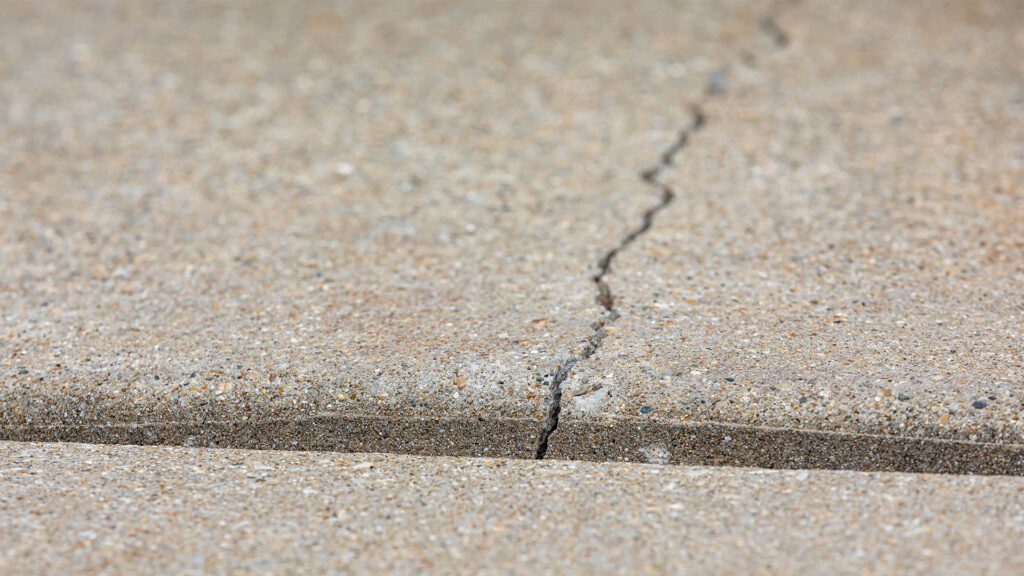
- Cracks developing across concrete slabs
- Water pooling near the home
- Gaps forming beneath concrete
- Areas that have become a tripping hazard
These problems rarely correct themselves. Over time, continued movement can make the area less safe and more expensive to repair.
Leveling vs. Replacement
Concrete leveling is a process that lifts and stabilizes an existing slab by injecting material beneath it. The material fills empty spaces and raises the concrete closer to its original position.
Polyurethane foam injection, sometimes called polyjacking, is one modern leveling method. Small access holes are drilled into the concrete, and expanding foam is injected beneath the slab. The foam fills underlying voids while carefully lifting and supporting the concrete.
Compared with removing and replacing an entire slab, leveling can often be completed with less mess, less disruption, and a faster turnaround. Many surfaces can be used again shortly after the work is completed.
However, leveling is not appropriate for every situation. Concrete that is severely cracked, crumbling, or structurally damaged may need to be replaced. A professional inspection can help determine the condition of the slab and identify what caused it to settle in the first place.
Before assuming damaged concrete must be torn out, have the area evaluated. Addressing the underlying problem early may help restore safety, improve curb appeal, and protect your investment.
To schedule an inspection with FND Piers, call 817-402-7113 or visit fndpiers.com.
Any content, resident submissions, guest columns, advertisements, and advertorials are not necessarily endorsed by or represent the views of Best Version Media LLC (BVM) or any municipality, homeowners associations, businesses, or organizations that this publication serves. BVM is not responsible for the reliability, suitability, or timeliness of any content submitted, inclusive of materials generated or composed through artificial intelligence (AI). All content submitted is done so at the sole discretion of the submitting party.