Why Your Flooring Won’t Look Exactly Like the Sample — And That’s Okay
One thing I explain to clients all the time is that a sample is exactly that—a sample. It’s there to help you decide, but it isn’t necessarily an exact picture of what an entire room will look like once the material is installed.
Many things can affect how we see color and texture—lighting, surrounding finishes, natural variation, dye lots, and even the size of the space. Understanding that before you make your selection can save you from second-guessing your decision later.
Take the Sample Home
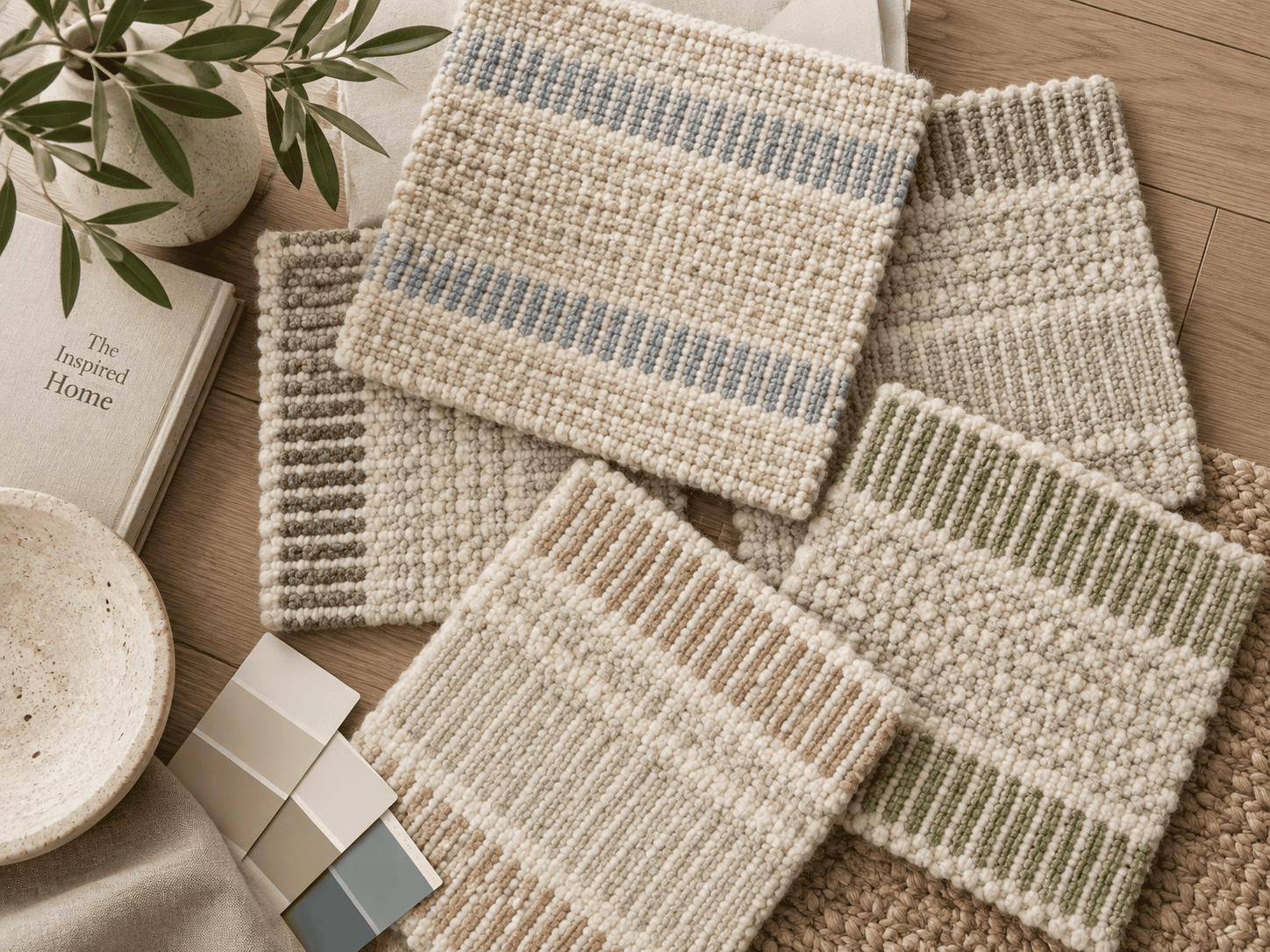
Whenever possible, I encourage my clients—borderline force them, lol—to take samples home before making a final decision.
Something that looks perfect under showroom lighting can look completely different in your house. Natural daylight, overhead lighting, and even the warmth of your light bulbs can change the way a color appears. Your cabinets, countertops, wall color, and furniture can also bring out undertones you didn’t notice in the showroom.
Submitted photo
That is also why I strongly advise against choosing flooring based on a website photo alone. Between photography and computer or phone screens, the color you’re seeing may not accurately represent the actual product.
If you’re making a significant investment in your home, it’s worth taking the extra time to see the real material in the space where it will go.
A Small Sample Can’t Tell the Whole Story — This Is Especially True with Hardwood
Wood is a natural material, so color, grain, and character will vary from board to board. A small sample simply can’t show you everything that may appear across an entire floor—and that’s part of what makes real wood beautiful.
Hardwood can also change over time. Exposure to natural light and oxidation can deepen or change the color, and areas under rugs or furniture may look different because they haven’t received the same amount of light.
Submitted photo
These aren’t defects. They’re characteristics of a natural product, and I think it’s important for homeowners to understand that before they make their choice.
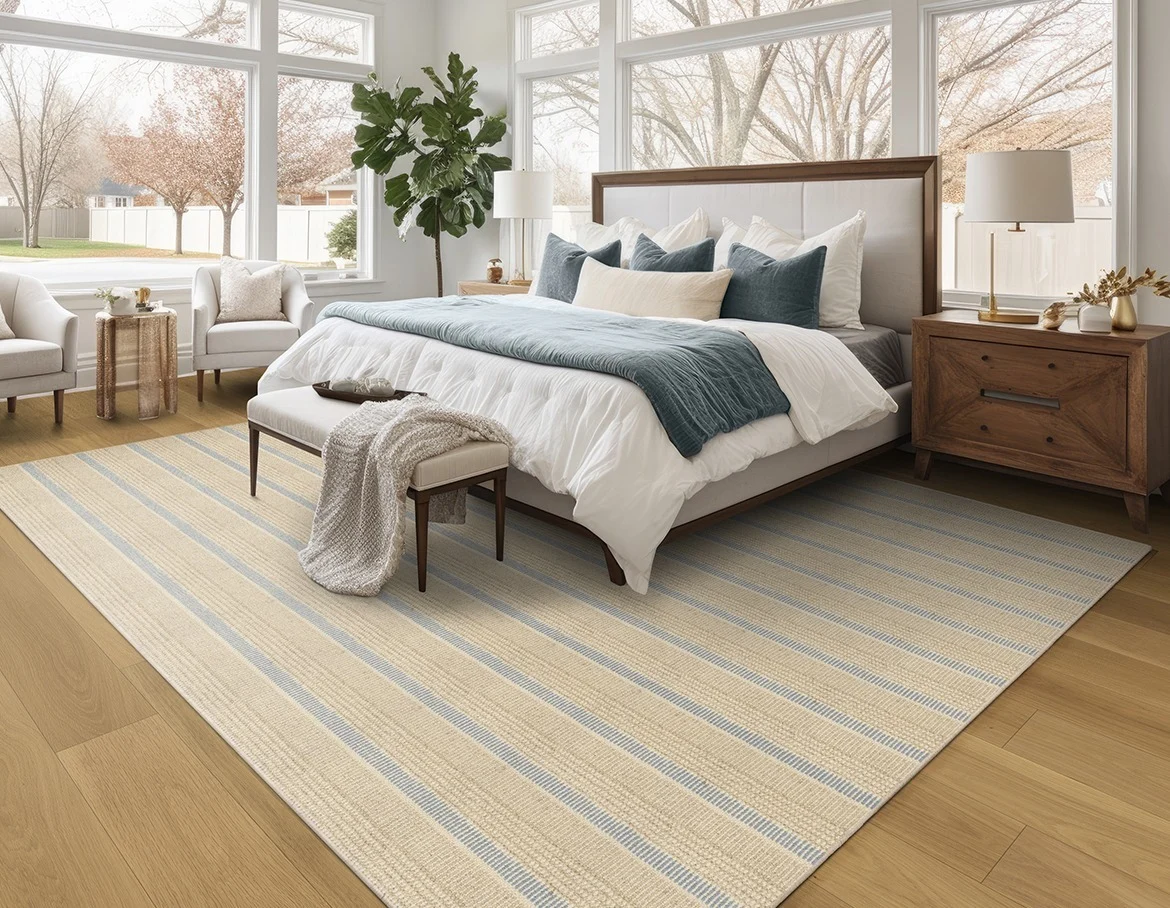
While I don’t recommend using online photos to judge a product’s exact color, manufacturer room scenes can be a helpful tool once you’ve narrowed your choices. Look up the product on the manufacturer’s website and see if they show it installed across an entire room. A room scene gives you a much better sense of the overall look, variation, pattern, scale, and how the material reads across a larger space than a small sample alone.
Carpet Can Vary, Too
Carpet isn’t immune to variation either. Different production runs can have slight color differences, which is why I recommend ordering enough material for the entire project at one time whenever possible.
Patterns are another good example. A small carpet sample lets you see the colors and texture up close, but a larger pattern can look completely different when repeated across an entire room or running up a staircase. This is another time when looking at a manufacturer’s room scene can be especially helpful.
Sometimes you need to step back to really see it.
Look at the Room, Not Just the Sample
When clients are torn between a few choices, I often tell them to stop staring at the samples on their own.
Put them next to the cabinets. Look at them with the sofa, countertop, or paint color. Then walk away and look at everything together.
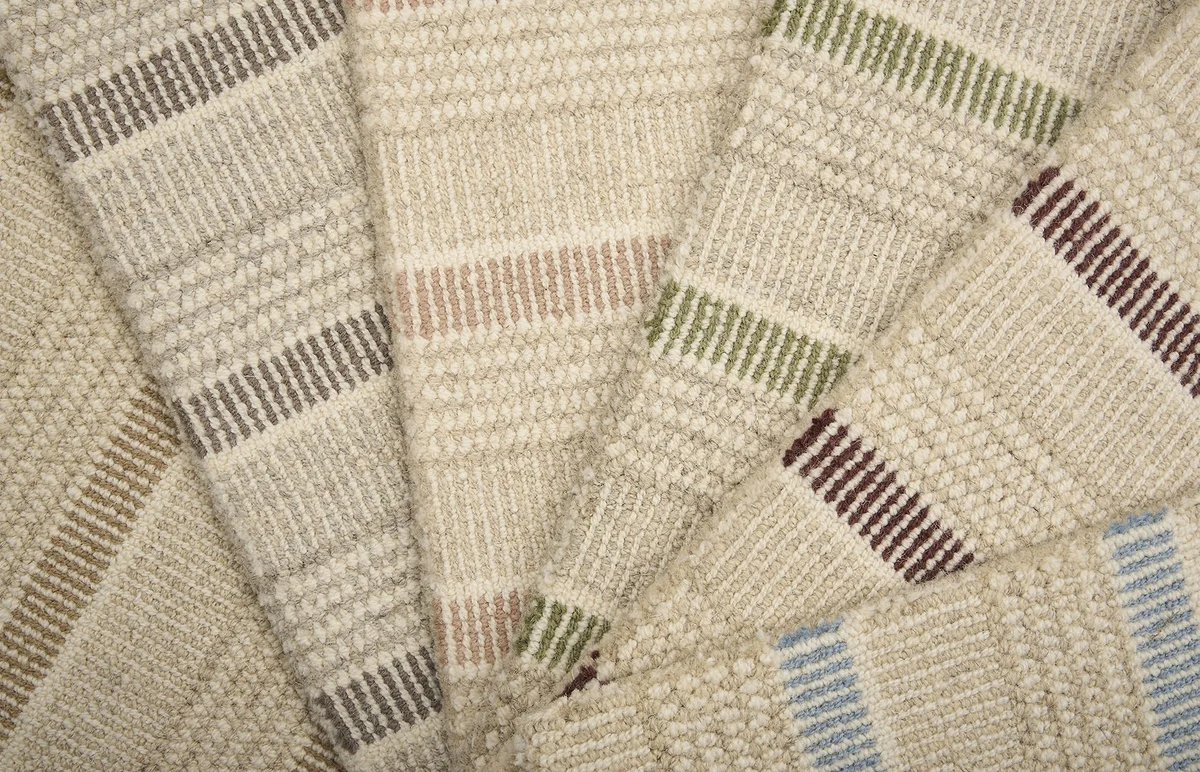
Submitted photo
Your flooring doesn’t always need to be the star of the room. Sometimes the best choice is the one that quietly pulls everything else together.
And this applies to more than flooring. Whether you’re choosing hardwood, carpet, luxury vinyl, countertops, wallpaper, upholstery, or window treatments, the goal isn’t for every individual item to be perfect on its own. It’s for everything to work together.
Don’t Chase the “Perfect” Color
I’ve watched homeowners get overwhelmed because they’re searching for the one shade that will match everything perfectly.
Usually, it doesn’t exist—and it doesn’t need to.
One of the biggest parts of my job is helping clients narrow down their choices and understand what they’re looking at so they can feel confident making a decision. Sometimes that means showing them something they hadn’t considered. Other times, it means explaining why the sample they thought was perfect may not actually be the best choice for their home.
Good design isn’t about making everything match perfectly. It’s about choosing materials that complement each other, work with the way you actually live, and create a home that feels right when you walk into it.
Nichole’s Expert Tips
~ Always take samples home when possible. Showroom lighting and website photos don’t tell the whole story.
~ Look at them morning and night. Color can change dramatically depending on the light.
~ Compare them to what’s staying. Cabinets, countertops, furniture, and wall colors should all factor into the decision.
~ Check manufacturer room scenes. Once you’ve narrowed down your choices, look at the manufacturer’s photos to see the product installed across an entire space. They’re especially helpful for understanding pattern, scale, and natural variation—but use the actual sample, not the photo, to judge color.
~ Expect some variation. Especially with natural materials like hardwood, natural woven wallpaper, and window treatments, where variation is part of the beauty.
~ Step back and look at the whole room. Don’t get so focused on one sample that you lose sight of how everything works together.
~ And most importantly, give yourself permission to stop searching once you’ve found something you love. Sometimes continuing to look doesn’t make the decision easier—it just makes you question a good choice.
Any content, resident submissions, guest columns, advertisements, and advertorials are not necessarily endorsed by or represent the views of Best Version Media LLC (BVM) or any municipality, homeowners associations, businesses, or organizations that this publication serves. BVM is not responsible for the reliability, suitability, or timeliness of any content submitted, inclusive of materials generated or composed through artificial intelligence (AI). All content submitted is done so at the sole discretion of the submitting party.