When most people think about exercise, they think about losing weight, building muscle, improving cardiovascular health, or simply looking better. But there is another benefit of strength training that becomes increasingly important as we age: protecting our bones.
Bone is living tissue. Throughout our lives, old bone is continually broken down and replaced. As we get older, however, we may begin losing bone faster than we rebuild it, increasing the risk of osteopenia, osteoporosis, fractures, and the loss of independence that can follow a serious fall.
This is particularly important for women during and after menopause, when declining estrogen can accelerate bone loss. But bone health isn’t just a women’s issue. Men also lose bone as they age.
Fortunately, our bones aren’t passive structures. They respond to what we ask them to do.
Bones Need a Reason to Stay Strong
One of the ways the body maintains strong bones is through mechanical loading.
When muscles contract forcefully, they pull on tendons, which transmit force to the bones. Appropriate resistance provides a stimulus involved in maintaining and remodeling bone tissue.
This is one reason strength training becomes more—not less—important as we get older.
And this is where isometric training becomes particularly interesting.
Isometric exercise involves producing muscular force with little or no visible movement at the joint. Instead of repeatedly lifting and lowering a weight, an individual may push, pull, press, squat, or hold against a fixed resistance.
The body may not appear to be moving much, but the muscles can be working extremely hard.
This allows us to create significant muscular tension and mechanical loading while limiting high-speed movement and repetitive joint motion.
It’s About More Than Bone Density
Consider what often threatens independence as we age: loss of leg strength, poor balance, reduced stability, difficulty getting out of a chair, fear of falling, and decreased confidence performing everyday activities.
Improving bone density is important, but preventing fractures isn’t only about stronger bones.
It’s about building a stronger person.
Stronger legs make it easier to stand from a chair. Greater muscular strength and stability can improve confidence navigating stairs and uneven surfaces. Better balance can help reduce fall risk, while stronger muscles surrounding the joints improve our ability to handle the demands of everyday life.
That’s why I believe strength should be viewed as one of the foundations of longevity.
Living longer is wonderful. But longevity without physical capability isn’t the goal.
We want to preserve the ability to travel, play with our grandchildren, carry groceries, get up from the floor, climb stairs, participate in recreational activities, and continue doing the things that make life enjoyable.
A Different Approach to Strength
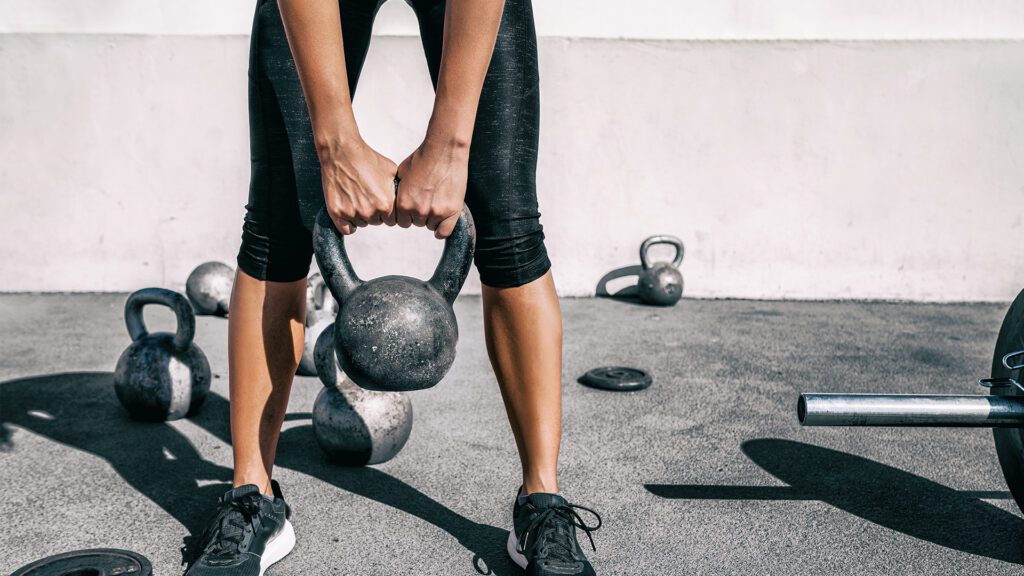
Traditional resistance training remains extremely valuable, and isometrics shouldn’t be viewed as a replacement for every other form of exercise. Instead, they are another powerful tool.
At Primal Fit Miami, we’ve incorporated structured isometric training using our Isofit system as part of a broader approach to strength and longevity.
For many adults—particularly those intimidated by traditional strength training or who don’t tolerate certain dynamic exercises well—isometrics can provide a controlled way to experience meaningful muscular resistance.
The goal isn’t simply to make exercise easier.
The goal is to make strength training effective, measurable, progressive, and appropriate for the individual.
A comprehensive approach to bone health should also include weight-bearing activity, progressive resistance training, adequate nutrition and protein, and appropriate medical screening when osteoporosis or significant bone loss is a concern.
There is no single exercise that solves aging. But after more than 27 years in the fitness industry, I’ve seen one principle hold true again and again:
The body adapts to what we consistently ask it to do.
Give muscles a reason to remain strong. Give bones a reason to maintain their strength. Challenge balance and stability so those abilities remain available when you need them.
Aging is inevitable.
Becoming weak doesn’t have to be.
Because longevity isn’t simply about adding years to your life.
It’s about building a body strong enough to live those years.
Matt Pack is the owner of Primal Fit Miami and has spent more than 27 years helping adults improve strength, movement, health, and quality of life through intelligent exercise.
Any content, resident submissions, guest columns, advertisements, and advertorials are not necessarily endorsed by or represent the views of Best Version Media LLC (BVM) or any municipality, homeowners associations, businesses, or organizations that this publication serves. BVM is not responsible for the reliability, suitability, or timeliness of any content submitted, inclusive of materials generated or composed through artificial intelligence (AI). All content submitted is done so at the sole discretion of the submitting party.