Rodent activity is often associated with the fall season. Well, in my experience, through rodent maintenance inspections of many different types of structures, I have found the levels of activity inside and outside of a structure to increase during weather extremes. In the summer, you can get dry spells, heavy days of rain, and very hot and humid days in the upper 90s, which will drive mouse or rat activity to the indoors. Whether getting away from the heat and drought conditions or the extreme cold and snow, the goal is shelter from the extreme temperatures.
The types of rodents that we find in our area are Deer Mouse, House Mouse, Wood Rat, Voles and Norway Rats. Each one of these rodents has different needs. But the one thing they all have in common is food, water and shelter are must-haves to survive.
STRATEGIES FOR RODENT PROOFING
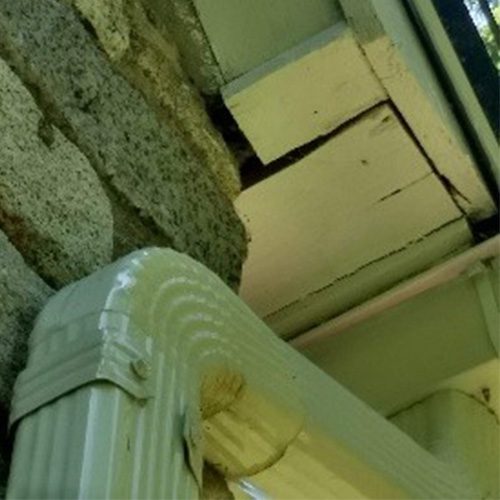
Making sure a structure is rodent proof is a process where all areas need to be looked at, including the areas that are not at ground level. Any rodent can climb up a rough surface to access an opening in a soffit to get into the attic space. Deer mice are known for looking for places high up, because they are often preyed upon and use trees to hide from their prey, so going up is in their DNA.
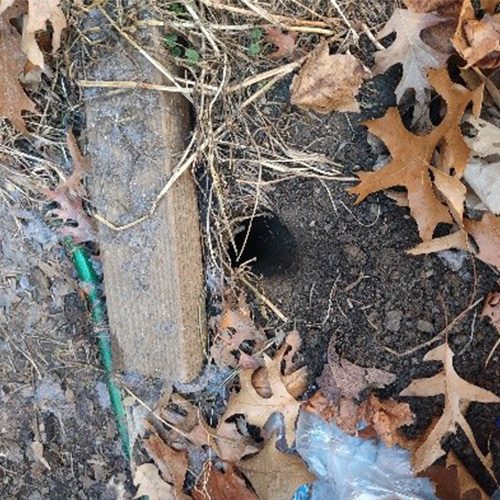
The other place rodents use to stay safe is in the ground. Wood Rats and Norway rats use ground burrows to protect themselves from prey.
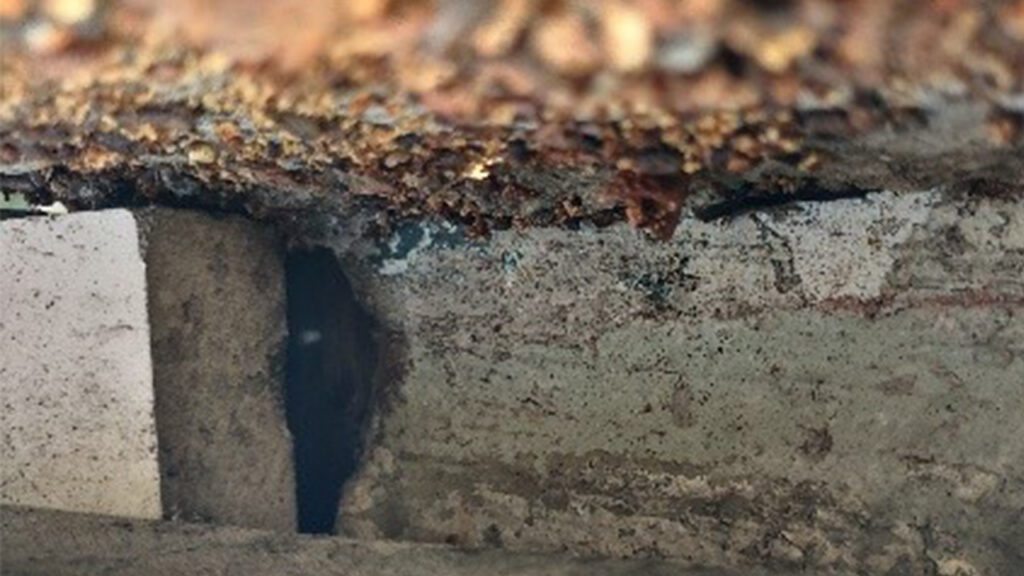
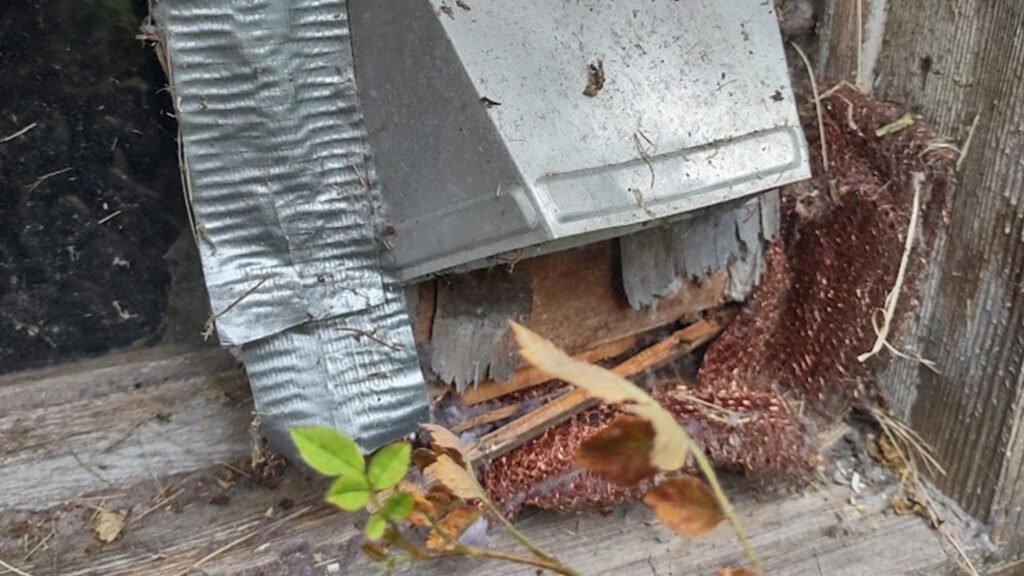
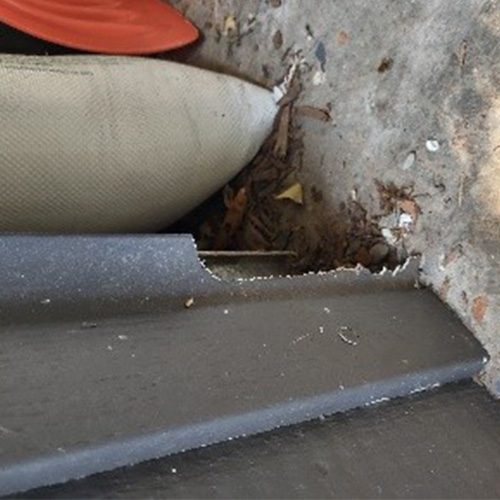
Access to structures is sometimes easy to spot and other times hard to find. As in one photo, it was easy to see a garage door gasket had been chewed off. But, as shown in another photo, a board had been chewed to gain access, which I only was able to find while laying on the ground.
FINDING ENTRY POINTS
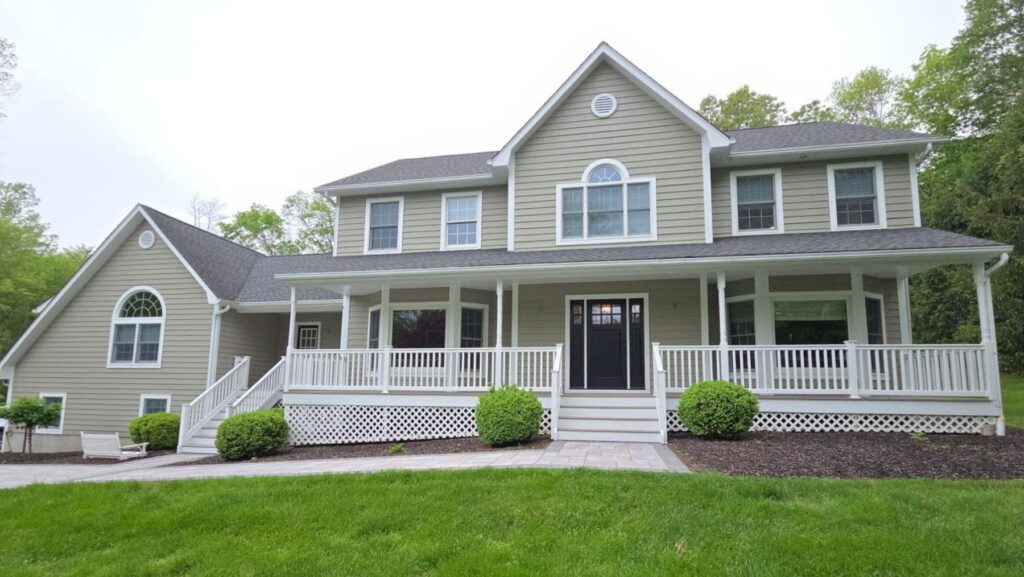
Finding entry points requires having access to the entire perimeter of a structure. Every house has its own personal touches. Some homes or commercial buildings have access to the entire perimeter so I can verify no entry points and if you find the bad places, I can easily make corrections. However, some buildings have blind areas, such as decks on or close to the ground level or heavy vegetation up against the foundation, making it impossible to get to.
There are ways to deal with decks that are close to the ground with gaps that allow for rodents and wildlife. Decks are typically attached to the house, which becomes the critical area where rodents have access to the structure. Such issues can be dealt with by rodent proofing it with the proper material so the rodents or wildlife can’t access the area under the deck.
Making a home or commercial building rodent proof can be a DIY project, but picking and making the application of the proper material that rodents can’t manipulate will require research. Being proactive and starting with rodent proofing is one of the best ways to protect a home or commercial building from future rodent activity. Removing a rodent may solve today’s problem, but identifying and correcting how it gained access can help prevent tomorrow’s activity.
THE RODENT’S POINT OF VIEW
Some rodent-proofing projects can certainly be handled by a homeowner, provided the proper materials and methods are used. Other entry points can be difficult to locate, especially around decks, rooflines, utility penetrations and areas with limited access. The important thing is to look at the structure from a rodent’s point of view: Where is the opportunity?
If you’re unsure where rodents may be gaining access, a professional inspection can help identify vulnerable areas and provide a plan for correcting them. Whether you prefer to handle the repairs yourself or have someone take care of the entire process, knowing where the problem starts is the first step toward keeping rodents where they belong—outside.
If you’re not a DIY person, PestGuard can help; if you are DIY person, we can still help with problem-solving and can be reached at 845-855-0614 or pestguardpro@gmail.com.
Any content, resident submissions, guest columns, advertisements, and advertorials are not necessarily endorsed by or represent the views of Best Version Media LLC (BVM) or any municipality, homeowners associations, businesses, or organizations that this publication serves. BVM is not responsible for the reliability, suitability, or timeliness of any content submitted, inclusive of materials generated or composed through artificial intelligence (AI). All content submitted is done so at the sole discretion of the submitting party.