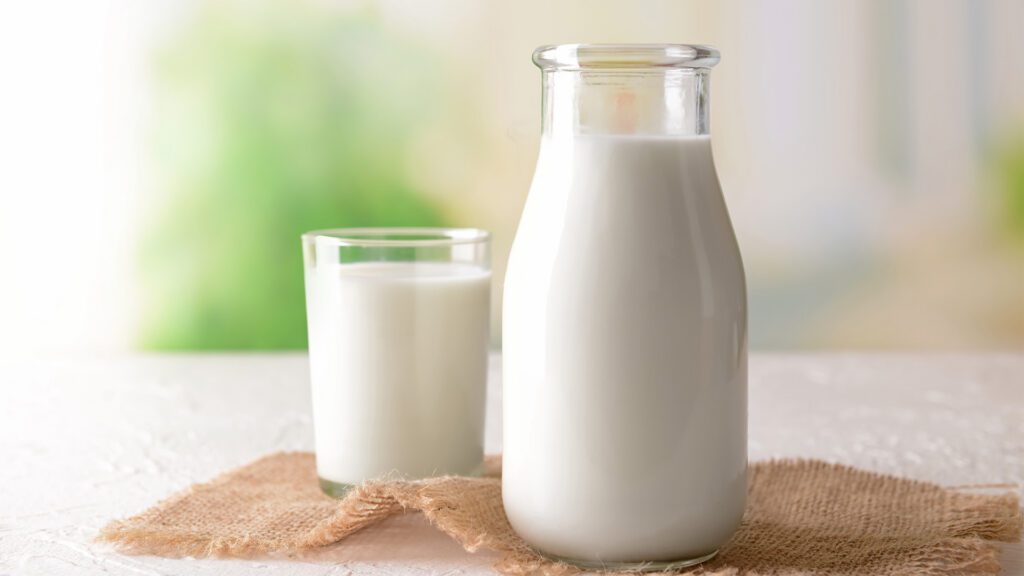
With whole milk, 2%, 1%, skim, pasteurized, and non-homogenized options, choosing a gallon of milk can feel more complicated than it should.
Most of these terms describe three basic things: how much milkfat is present, how the milk has been heated for safety, and whether the cream has been kept from separating. Understanding those differences can help you choose and store milk with confidence.
Whole, 2%, 1%, and Skim
The percentage printed on a milk jug refers to the amount of milkfat, also called butterfat, measured by weight.
Whole milk contains at least 3.25% milkfat. To make 2%, 1%, and skim milk, some or nearly all of that butterfat is removed. The milk is not watered down, although removing fat changes its appearance, texture, and flavor.
Generally, milk with more butterfat tastes richer and creamier, while lower-fat milk has a lighter body. Vitamin D is also commonly added to milk, while vitamin A is added to reduced-fat and fat-free varieties to replace what is lost when milkfat is removed.
What is Pasteurization, Exactly?
Pasteurization heats milk to a specific temperature for a set amount of time to destroy potentially harmful microorganisms. It also helps extend the milk’s refrigerated shelf life.
A common method is High Temperature Short Time, or HTST, in which milk is heated to at least 161°F for 15 seconds and then cooled quickly. Other methods use different combinations of time and temperature. Higher-temperature methods generally give unopened milk a longer shelf life.
Pasteurization provides an important food-safety step. Although heating can slightly reduce some heat-sensitive vitamins, research has found that the overall effect on milk’s nutritional value is minimal.
At Kilgus Farmstead, our milk is pasteurized using the HTST method but is not homogenized. As a result, the cream naturally rises and forms a visible creamline.
Pasteurization and Homogenization Are Not the Same
While pasteurization uses heat to make milk safer, homogenization keeps the milkfat from separating.
Milk naturally contains milkfat, which is less dense than the rest of the milk. When milk is left undisturbed, some of that fat gradually rises and forms a layer of cream at the top.
Homogenization breaks the milkfat into much smaller particles and distributes it evenly throughout the milk. This keeps the cream from separating and gives the milk a consistent texture.
Non-homogenized milk has not undergone this process, so the cream naturally rises. Whole milk will develop a more noticeable creamline than lower-fat varieties.
Quick Tip: Shake It Up! Before pouring non-homogenized milk, gently shake the container to redistribute the cream.
Understanding the Date on the Jug
Best-by, use-by, and sell-by dates generally describe product quality rather than food safety.
- A best-by date indicates when the milk is expected to have its best flavor and quality.
- A use-by date is the manufacturer’s recommendation for enjoying the product at peak quality.
- A sell-by date helps the store determine how long to display the product.
How long milk actually lasts depends on how it was processed, transported, and stored. Milk that develops a sour smell, unpleasant flavor, or curdled texture should be discarded.
Keeping It Fresh
A few simple habits can help milk retain its quality:
- Keep your refrigerator at 40°F or below.
- Store milk toward the back of the refrigerator rather than in the door.
- Return the container to the refrigerator promptly after pouring.
- Keep the cap or carton completely closed.
- During warm weather, transport milk in the air-conditioned passenger area or a cooler rather than a hot trunk.
If milk is approaching its date but shows no signs of spoilage, consider using it in pudding, soups, sauces, baked goods, or other cooked recipes.
The next time you pick up a jug, take a moment to read the label. Once you understand milkfat, pasteurization, homogenization, and product dates, choosing the right milk becomes much simpler.
Any content, resident submissions, guest columns, advertisements, and advertorials are not necessarily endorsed by or represent the views of Best Version Media LLC (BVM) or any municipality, homeowners associations, businesses, or organizations that this publication serves. BVM is not responsible for the reliability, suitability, or timeliness of any content submitted, inclusive of materials generated or composed through artificial intelligence (AI). All content submitted is done so at the sole discretion of the submitting party.