Scoliosis is one of the most common concerns I hear about from parents, and also one of the most misunderstood. After nearly four decades treating children with spinal deformities, I’ve seen firsthand how early detection and the right treatment can change a child’s outcome.
Scoliosis can be easy to miss. A child may feel perfectly fine, participate in sports and never complain about back pain, even as a spinal curve develops during rapid growth. Often, the first sign is something subtle noticed by a parent, pediatrician or school nurse: one shoulder sitting higher than the other, uneven hips, a prominent rib or an abnormal scoliosis screening.
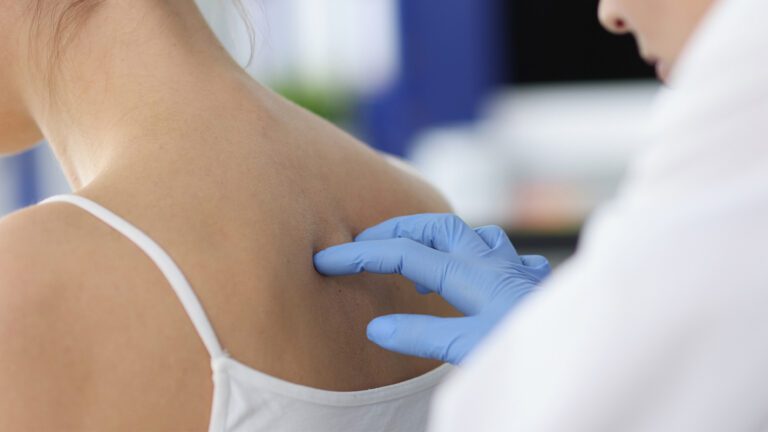
Because adolescent scoliosis is usually painless, pediatricians and school nurses are often the real heroes in this story —they’re the first line of detection. During an exam, the Adams forward bend test makes asymmetry easier to see, while a scoliometer measures trunk rotation. A reading of five degrees or more generally warrants further evaluation. A referral does not mean a child will need treatment. It simply means it’s time for a closer look.
One of the most important things I tell parents is that a scoliosis diagnosis does not necessarily mean surgery. The way we manage scoliosis has changed dramatically over the course of my career. Depending on a child’s age, growth remaining and degree of curvature, we may simply monitor the spine or use scoliosis-specific physical therapy and custom bracing to help prevent progression.
This is personal to me because my own daughter had scoliosis and was successfully treated with bracing. Today, advances such as EOSedge allow us to obtain detailed 2D and 3D standing images of the spine with significantly less radiation than traditional X-rays, which is particularly important for children who may need repeated imaging as they grow.
For the smaller percentage of children whose curves continue to progress despite non-operative treatment, surgery remains an important option. Here, too, treatment has evolved tremendously. Advances in surgical planning, pain management and early mobility have made recovery very different from what it was earlier in my career.
For parents, the takeaway is straightforward: don’t panic, but don’t delay either. Pay attention to subtle changes in posture and follow up when something doesn’t look right. Early evaluation gives us the greatest opportunity to manage scoliosis conservatively and keep children active and doing the things they love.
Any content, resident submissions, guest columns, advertisements, and advertorials are not necessarily endorsed by or represent the views of Best Version Media LLC (BVM) or any municipality, homeowners associations, businesses, or organizations that this publication serves. BVM is not responsible for the reliability, suitability, or timeliness of any content submitted, inclusive of materials generated or composed through artificial intelligence (AI). All content submitted is done so at the sole discretion of the submitting party.