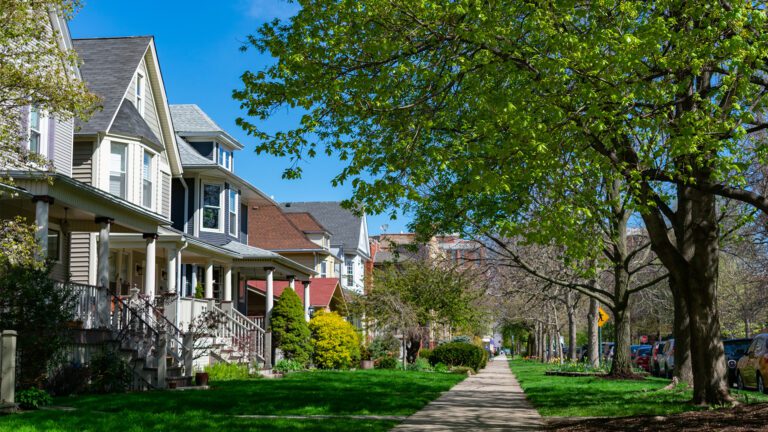

When we think about what makes a community a great place to live, we often picture welcoming neighbourhoods, beautiful parks, and well-maintained streets. But another feature quietly contributes to the health and character of our communities every day: our urban trees.
From mature maples shading residential streets to oaks and elms growing in local parks, trees are much more than attractive additions to the landscape. They are essential to a healthy urban environment, providing benefits that extend far beyond their branches.
Cooling Our Communities
Anyone who has walked along a tree-lined street on a hot summer afternoon understands the value of shade. Urban trees cool their surroundings by blocking direct sunlight and releasing moisture through a natural process called transpiration.
In developed areas, roads, sidewalks, and rooftops absorb and retain heat, creating what is known as the urban heat island effect. Trees help counteract this phenomenon, making neighbourhoods more comfortable during increasingly frequent heat waves.
Shaded sidewalks encourage walking, leafy parks provide comfortable gathering spaces, and trees planted around homes can reduce summer air-conditioning needs. Maintaining a healthy tree canopy is an investment in both community comfort and climate resilience.
Cleaner Air, Healthier Ecosystems
Trees contribute to healthier surroundings by capturing some airborne particles, absorbing carbon dioxide, and storing carbon as they grow. Their leaves, branches, and root systems also help manage stormwater by intercepting rainfall and encouraging water to soak into the ground, potentially reducing runoff and pressure on municipal drainage systems.
Urban trees also support biodiversity. Birds rely on their branches for nesting, while insects and other wildlife depend on their flowers, leaves, and bark for food and shelter.
Native species, including oaks, maples, and birches, are particularly valuable to local ecosystems. Planting a diverse mix of suitable species strengthens urban forests against pests, diseases, and changing environmental conditions.
More Than Environmental Benefits
The value of urban trees extends to our physical and mental well-being. Green spaces encourage walking, recreation, and social connection while offering peaceful places to unwind.
Trees also help define a community’s identity. Mature trees can give historic streets their distinctive character, while seasonal changes bring spring blossoms, summer shade, and brilliant autumn colours. These everyday experiences create a sense of place and strengthen our connection to the natural world.
Protecting What We Already Have
While planting new trees is important, preserving healthy mature trees should be a priority whenever possible.
A newly planted sapling may require decades to provide the same shade, habitat, and environmental benefits as an established tree. Unfortunately, urban trees face considerable challenges, including soil compaction, construction damage, road salt, drought, and limited growing space.
Homeowners can help protect existing trees by avoiding unnecessary disturbance around root zones, preventing damage to trunks and branches, and arranging appropriate pruning. During construction or landscaping projects, protecting established root systems is especially important.
When removal becomes necessary because a tree is dead, hazardous, or unsuitable for its location, replacement planting helps maintain the community’s canopy. However, protecting healthy mature trees remains one of the most effective strategies.
The Right Tree in the Right Place
Successful tree planting begins with choosing a species suited to its surroundings.
Consider the available space above and below ground, soil conditions, drainage, sunlight, and exposure to road salt. A large-growing tree planted beneath utility lines or in a restricted space may encounter significant problems as it matures.
New trees also require ongoing attention. Regular watering during establishment, proper mulching, protection from mechanical damage, and periodic inspections help them develop into healthy, long-lived trees.
A Shared Investment in Our Future
Urban trees are living infrastructure. Like roads and drainage systems, they require thoughtful planning, maintenance, and investment. Unlike built infrastructure, however, their benefits can increase as they grow. Municipalities, developers, property owners, and residents all share responsibility for protecting and expanding our urban forests.
A tree planted today may one day shade a neighbourhood sidewalk, shelter wildlife, or become a cherished local landmark. By caring for the trees we have and planting thoughtfully for the future, we help create healthier, more resilient communities for generations to come.
Any content, resident submissions, guest columns, advertisements, and advertorials are not necessarily endorsed by or represent the views of Best Version Media LLC (BVM) or any municipality, homeowners associations, businesses, or organizations that this publication serves. BVM is not responsible for the reliability, suitability, or timeliness of any content submitted, inclusive of materials generated or composed through artificial intelligence (AI). All content submitted is done so at the sole discretion of the submitting party.