By August, many homeowners begin to wonder what happened to the beautiful landscape they enjoyed in spring. Lawns turn brown, plants wilt, flowers fade, and landscape beds seem to struggle despite regular watering.
The truth is that summer stress is often less about the heat itself and more about how well our landscapes are prepared to handle it.
Here in Northern Kentucky, one of the biggest challenges we face is heavy clay soil. Clay soil holds moisture longer than sandy soil, but it can also become compacted, limiting the movement of water, air, and nutrients to plant roots. During periods of intense heat, that combination can create stress that shows up throughout your property.
Water Smarter, Not More
One of the most common mistakes homeowners make is watering too frequently for short periods. Light daily watering encourages shallow roots, making plants more vulnerable when temperatures soar.
Instead, focus on deep, infrequent watering. Most established landscapes benefit from approximately one inch of water per week, either from rainfall or supplemental watering. Watering early in the morning helps reduce evaporation and allows moisture to soak deeper into the soil where roots need it most.
Signs your plants may need water include:
- Wilting during the morning hours
- Dry soil several inches below the surface
- Browning leaf edges
- Premature leaf drop
Remember that temporary afternoon wilting is often a plant’s natural response to heat and does not always indicate a need for watering.
Consider Micro Irrigation for Targeted Watering
Not every landscape requires a large, in-ground irrigation system. For many homeowners, micro irrigation offers an affordable and highly effective alternative.
Micro irrigation systems use small tubing, emitters, and drip lines to deliver water directly to the root zone of plants, where it is needed most. Because water is applied slowly and precisely, there is less waste from runoff, overspray, and evaporation.
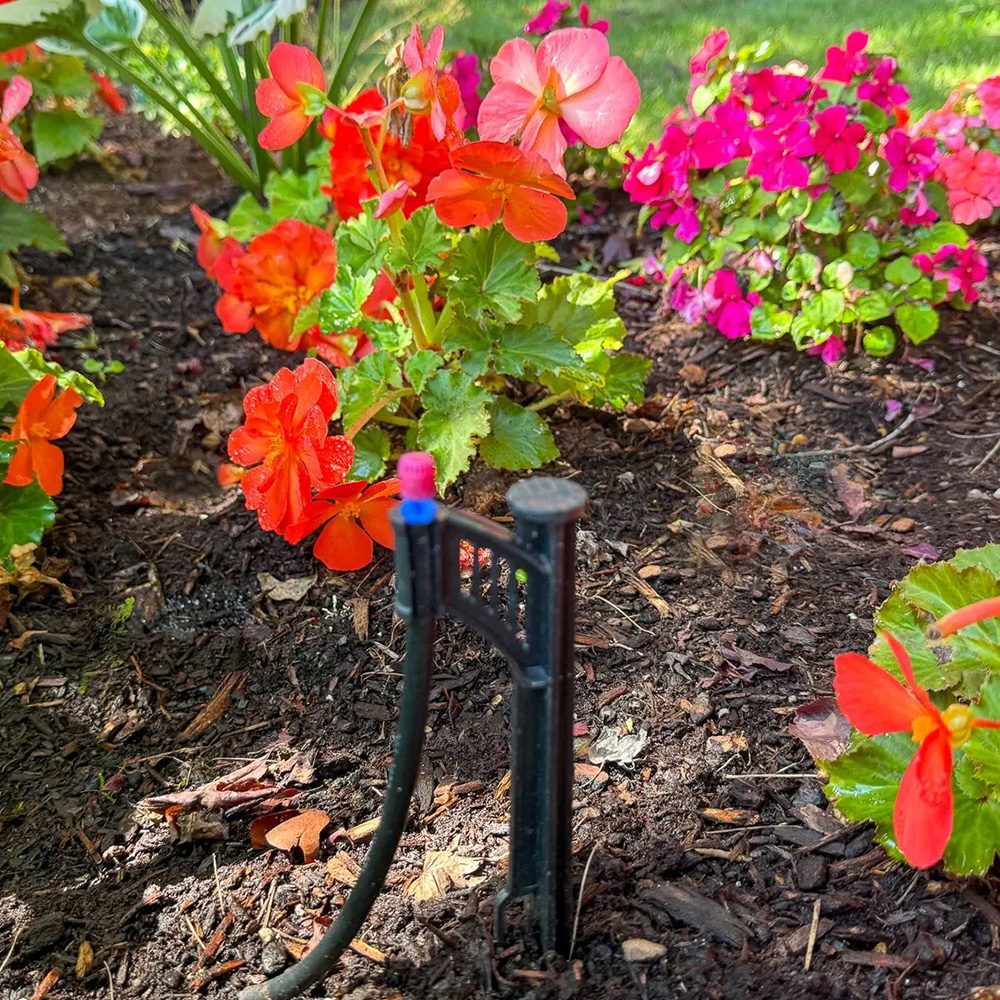
These systems are especially beneficial for:
- Flowerpots and container gardens
- Annual flower beds
- Vegetable gardens
- Foundation plantings
- Newly installed trees and shrubs
- Raised garden beds
- Hanging baskets
One of the biggest advantages of micro irrigation is convenience. Many systems can be connected to a simple timer, allowing plants to receive consistent watering even when you are away from home. This can be especially valuable during summer vacations when containers, patio planters, and hanging baskets can dry out quickly.
Micro irrigation can also provide cost savings compared to traditional sprinkler systems. Installation is typically less invasive, requires fewer components, and uses considerably less water. Since the water is delivered directly to plant roots, homeowners often see improved plant health while reducing overall water consumption.
For homeowners looking to protect their landscape investment without installing a full irrigation system, micro irrigation can be a practical solution that combines efficiency, affordability, and ease of use.
Pro Tip
Many homeowners assume containers need to be watered by hand every day during summer. A simple micro irrigation system connected to a timer can often keep flowerpots, hanging baskets, and patio planters healthy all season while using less water and eliminating the daily chore of watering.
At The Decor Group of NKY, we often install micro irrigation systems as part of landscape
renovations and seasonal flower programs. Whether you are looking to simplify watering for a few patio containers or provide targeted irrigation for landscape beds and new plantings, micro irrigation can be customized to fit almost any property and budget.
Working With Clay Soil
Clay soil is often viewed as a problem, but it can be managed successfully. Adding organic matter, such as compost, helps improve soil structure over time, allowing roots to grow deeper and access moisture more effectively.
Mulch is another valuable tool. A two- to three-inch layer of mulch helps regulate soil
temperature, reduce moisture loss, and suppress weeds that compete for water.
Avoid piling mulch against trunks or stems, which can lead to disease and pest issues.
Consider Drought-Tolerant Plants
Modern landscapes can be both beautiful and resilient. Many plants thrive with less supplemental watering once established.
Some excellent choices for our area include:
- Coneflower
- Black-Eyed Susan
- Russian Sage
- Catmint
- Sedum
- Switchgrass
- Little Bluestem
- Daylilies
These plants, along with many others, provide season-long interest while requiring less
maintenance and water than many traditional landscape selections.
Renovate Problem Areas
If certain areas of your property consistently struggle, August is an excellent time to evaluate them. Poor drainage, compacted soil, excessive shade, reflected heat from pavement, and improper plant selection often contribute to ongoing problems.
Sometimes the best solution is not adding more water. It is improving the conditions that caused the issue in the first place.
A professional landscape evaluation can identify underlying concerns and help develop long-term solutions that save both water and maintenance costs.
As summer winds down, now is the perfect time to assess your landscape’s performance and start planning improvements for the fall planting season.
A healthy landscape is not just about surviving summer. It is about creating a property that thrives through every season.
Pro Tip
Check before you water. Use a screwdriver or soil probe. If you can easily push it four to six inches into the soil, there is usually adequate moisture below the surface.
Summer Fun Reminder
August is also a great time to enjoy the outdoor spaces you already have. A shaded patio, healthy container gardens, fresh seasonal color, and well-watered landscape beds can make your home feel more inviting for cookouts, family nights, and those last summer evenings before school routines begin again.
For families looking for ways to keep kids active and entertained, apps and online resources can be helpful for finding parks, splash pads, walking trails, family-friendly events, and outdoor activities. One option to search for is ParentMap, which offers family activity ideas and parenting resources. It can be found online by searching ParentMap or visiting ParentMap.com.
The goal is simple: enjoy the season, protect your landscape investment, and make the most of your outdoor spaces while summer is still here.
Common Mistakes We See
1. Watering Every Day
Frequent shallow watering creates weak root systems.
2. Watering at Midday
Much of the water is lost to evaporation.
3. Volcano Mulching
Piling mulch against trunks can damage plants.
4. Ignoring Soil Conditions
The right plant in the wrong location will always struggle.
Seasonal Offer
Landscape Problem Area Consultation
Do you have an area that never seems to thrive? Whether it is poor drainage, bare spots,
struggling plants, or compacted clay soil, The Decor Group of NKY can help identify the cause and recommend lasting solutions.
Don’t forget to stop by our office at 2942 Park Street, Burlington, to pick up your free rain
gauge.
Any content, resident submissions, guest columns, advertisements, and advertorials are not necessarily endorsed by or represent the views of Best Version Media LLC (BVM) or any municipality, homeowners associations, businesses, or organizations that this publication serves. BVM is not responsible for the reliability, suitability, or timeliness of any content submitted, inclusive of materials generated or composed through artificial intelligence (AI). All content submitted is done so at the sole discretion of the submitting party.