For decades, diamonds have dominated the conversation in fine jewelry. But lately, I’ve noticed more clients looking beyond the traditional and asking about something far more individual: colored gemstones.
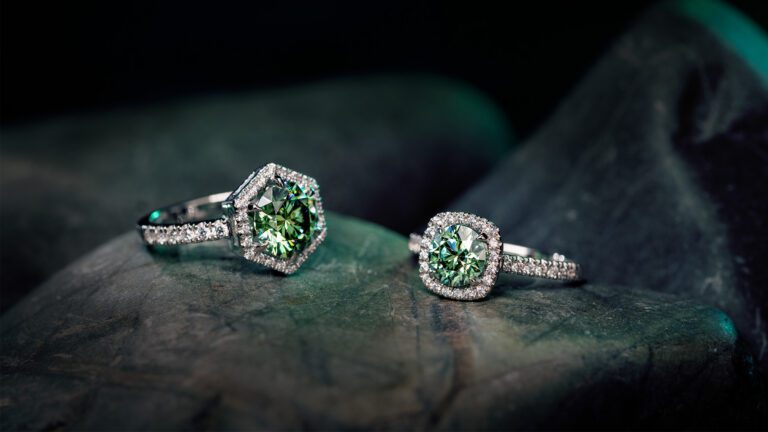
Sapphires, rubies, emeralds, spinels, tourmalines and other exceptional gems are finding their way into engagement rings, anniversary pieces and custom designs. I don’t think it’s simply a trend. People are becoming more interested in owning jewelry that feels personal—and colored gemstones offer possibilities that diamonds simply cannot.
Buying one, however, requires a very different way of thinking.
With diamonds, consumers have been taught to rely heavily on the 4Cs. Colored gemstones don’t fit nearly as neatly into that system. In most cases, color is the single most important factor, and surprisingly subtle differences in hue, tone and saturation can dramatically affect both beauty and value.
I’ve spent much of my career buying and selling vintage and estate jewelry, where those differences become very real. When you are actually purchasing a piece rather than simply studying it, you learn quickly how much a subtle shift in color can matter.
A gemstone can look exceptional under one type of lighting, yet reveal a very different body color in another. That difference can sometimes mean you paid one price for a stone that, upon closer examination, is worth considerably less.
That experience teaches you to look at gemstones differently.
Two of the first properties we use when separating and identifying colored gemstones are refractive index (RI) and body color, or hue. Refractive index measures how light travels through a gemstone and provides an important clue to its identity. Color provides another—but color itself can be deceptive, which is why a gemstone should never be identified or valued by appearance alone.
Clarity is different in colored stones as well. Many natural gemstones contain inclusions, and some varieties are expected to have them. An emerald with visible inclusions, for example, isn’t automatically an inferior emerald. Demanding diamond-like clarity in certain gemstones can actually lead you away from some very beautiful and valuable stones.
Then there are factors most consumers never see on a jewelry tag. Was the gemstone heated, filled or diffused? Is the color natural? Where was it mined? Some treatments are widely accepted within the industry, while others can significantly affect value. Geographic origin can also matter tremendously in exceptional stones.
After nearly 30 years working with jewelry and gemstones—and as a GIA Graduate Gemologist—I’ve learned that some of the most valuable knowledge comes from handling a wide variety of stones: comparing them, buying them, and learning what separates an ordinary gemstone from an extraordinary one.
A diamond can be spectacular. But generally speaking, they can all begin to look the same. Colored gemstones offer beauty, rarity and mystery. A slight difference in hue can change everything, and sometimes the most interesting stones are the ones that don’t fit neatly into a category.
No two are quite alike. Perhaps that’s why colored gemstones feel so personal—we’re drawn to their individuality much the same way we’re drawn to people. In both, it’s their unique character that makes them extraordinary.
Any content, resident submissions, guest columns, advertisements, and advertorials are not necessarily endorsed by or represent the views of Best Version Media LLC (BVM) or any municipality, homeowners associations, businesses, or organizations that this publication serves. BVM is not responsible for the reliability, suitability, or timeliness of any content submitted, inclusive of materials generated or composed through artificial intelligence (AI). All content submitted is done so at the sole discretion of the submitting party.