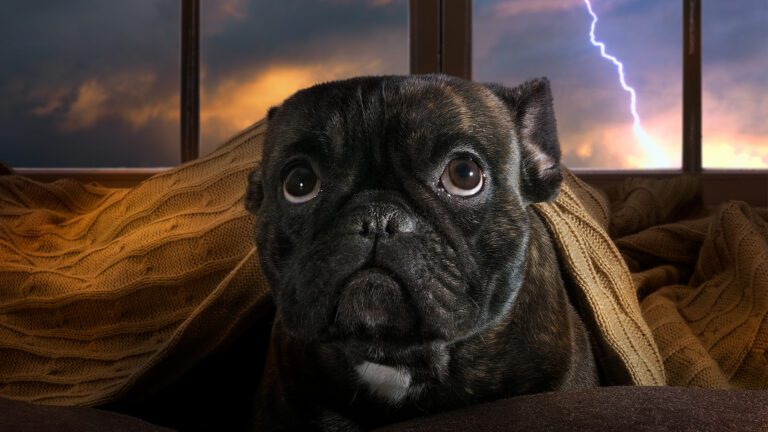
The storm season is here, bringing heavy rain, bright lightning, and loud claps of thunder. While this might just mean a change in the weather for us, thunderstorms are a source of absolute terror for many dogs and cats. Storm phobia and noise anxiety are real medical issues. It is not just “bad behavior,” but a panic response that your pet cannot control. As a veterinarian, I want to explain why this happens and show you what you can do to help your best friend feel safe.
Why Are They So Scared of Storms? Animals have senses that are much sharper than ours, meaning they do not just react to a sudden boom of thunder. Their anxiety can start hours before the storm even arrives. This happens because pets feel the sudden drop in barometric air pressure inside their ears. At the same time, the charged atmosphere builds up uncomfortable static electricity in their fur, which is especially true for large or long-haired dogs. They can also hear the low vibrations of a storm when it is still many miles away, sensing danger long before we do.
Signs That Your Pet is Having a Hard Time Sometimes fear is obvious, but other signs can be very subtle. You should watch out for physical cues like body shaking, heavy panting, or excessive drooling. Your pet might also pace back and forth without stopping or try to hide in tight spaces like the bathroom, under the bed, or inside closets. In more severe cases, panicking pets will scratch desperately at doors and walls to escape, which can cause severe injuries. They may also bark, whine, or meow non-stop to voice their distress.
Practical Steps to Protect Them at Home As their owner, you can create an action plan for stormy days by setting up a safe haven in the quietest room of your house, such as a windowless bathroom, and filling it with their bed, favorite toys, and a piece of your clothing. To minimize the triggers, close all windows and pull down the blinds to block out flashes of lightning, while playing relaxing music or white noise to drown out the heavy thunder. You can also reduce static buildup in their fur by wiping them down with a damp towel or letting them sit in a dry bathtub. For physical comfort, using compression wraps like a Thundershirt applies gentle, constant pressure that naturally releases calming hormones. Finally, remember to stay calm yourself because animals read our body language, and comforting them with a soft voice will reassure them without worsening their fear.
When It’s Time to Visit the Vet Clinic If your pet hurts themselves trying to escape, destroys things in the house, or experiences uncontrollable panic, they need medical help. At our clinic, we can evaluate your pet to offer advanced solutions like natural pheromone diffusers and calming supplements. We can also prescribe safe, fast-acting anti-anxiety medications to give right before a storm starts, or create long-term desensitization plans to retrain how their brain reacts to loud noises. Do not let your pet suffer in silence; if your pet is exhibiting any severe behavior, please schedule an appointment with us today to keep them safe and peaceful.
Any content, resident submissions, guest columns, advertisements, and advertorials are not necessarily endorsed by or represent the views of Best Version Media LLC (BVM) or any municipality, homeowners associations, businesses, or organizations that this publication serves. BVM is not responsible for the reliability, suitability, or timeliness of any content submitted, inclusive of materials generated or composed through artificial intelligence (AI). All content submitted is done so at the sole discretion of the submitting party.